Petra Büker (Ed.): KinderStärken
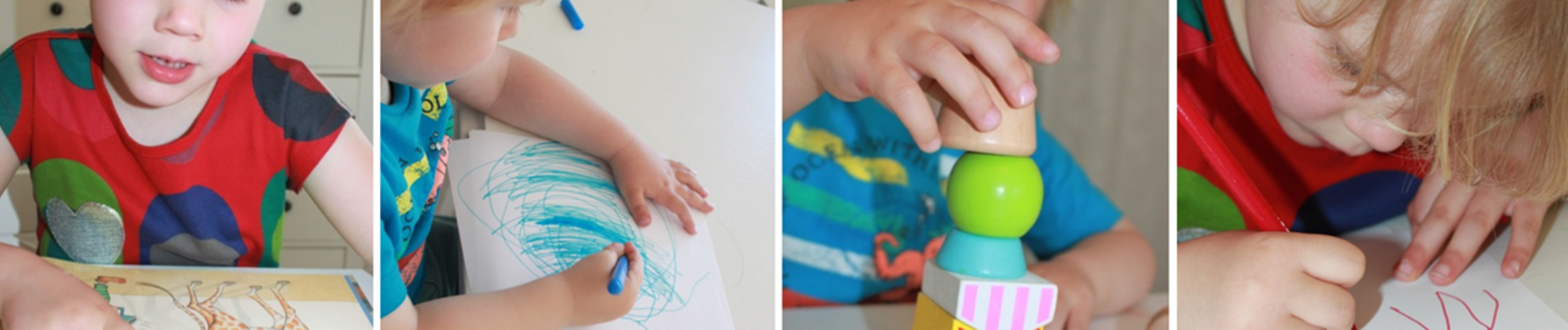
Children have enormous strengths for shaping their pluralistic, complex living environments, which need to be recognised and strengthened as competent co-actors by families, peers and educational subject areas and teachers. This basic idea is taken up in the new KinderStärken series of specialised books and examined in detail in ten volumes along the life span from birth to the transition to secondary school.
Experts from the fields of early childhood, elementary and primary school education and developmental psychology each devote a volume to a specific topic. They enquire into the needs, interests and individual logic of children at relevant stages of their educational biography and discuss innovative pedagogical answers in the sense of resource-orientated, child-strengthening pedagogy. The volumes refer to the latest research and are at the same time close to educational practice. They invite readers to take a critical and differentiated look at the prominent paradigm in early childhood and primary school education: "The child as a competent actor" and to develop perspectives for the innovation of a resource-orientated pedagogy in the family, daycare centre and primary school.
The series is aimed at academics, students and those involved in educational practice.
The volumes of the series have been published continuously since 2015.
Further information can be found at www.kohlhammer.de under "New publications".
Already published:
| Volume 1 | Petra Büker (ed.): Kinderstärken - Kinder stärken. Designing upbringing and education in a resource-orientated way. | |
Volume 2 | Petra Völkel: Development, learning and support for the youngest children. | |
| Volume 3 | Renate Niesel & Wilfried Griebel: Shaping transitions in a resource-orientated way: From the family to child day care. | |
| Volume 4 | Dagmar Kasüschke: Child-empowering pedagogy and didactics in the daycare centre. | |
| Volume 5 | Melanie Eckerth & Petra Hanke: Designing transitions in a resource-orientated way: From daycare centre to primary school. | |
| Volume 6 | Susanne Miller & Katrin Velten: Kinderstärkende Pädagogik in der Grundschule. | |
| Volume 7 | Petra Büker & Julia Höke Petra Büker and Julia Höke focus on the core pedagogical tasks of observing and documenting children's development, learning and educational processes. A special feature of the volume, in which the experiences of primary school teacher Petra Büker and childhood educator Julia Höke come together, is the overarching consideration of educational documentation in day-care centres, primary schools and in transition. The volume offers a critical analysis of the current subject area discourse and current procedures and outlines a model of educational documentation that strengthens children, is participatory and at the same time professionalises subject areas and teachers. Reflection in dialogue between all those involved is identified as the key to professional educational documentation. | |
| Volume 9 | Charlotte Röhner & Marianne Wiedenmann: Strengthening children in language(s) and communication. | |
| Volume 10 | Ursula Carle & Jana Herding: From primary school to secondary school - organising transitions in a resource-oriented way In their volume, Ursula Carle and Jana Herding address the question of how the transition from primary school to secondary school, which is marked as a crucial junction for educational trajectories and is still characterised by problems of inequality of opportunity and social selection, can be designed in such a way that it is based on the child's individual and systemic resources. Fundamental scientific positions are also introduced on the basis of an institutional-historical analysis, exemplary transition conditions in the context of inclusion are examined and - as a special feature of this volume - the views of fourth and fifth graders collected in a child study are presented. |
Coming soon in this series:
Volume 8: Birgit Hüpping & Petra Büker: Kulturelle Vielfalt. Pedagogy that strengthens children.