The case of the USA: Democracy between pop and populism, between negotiation and riot (Talk)
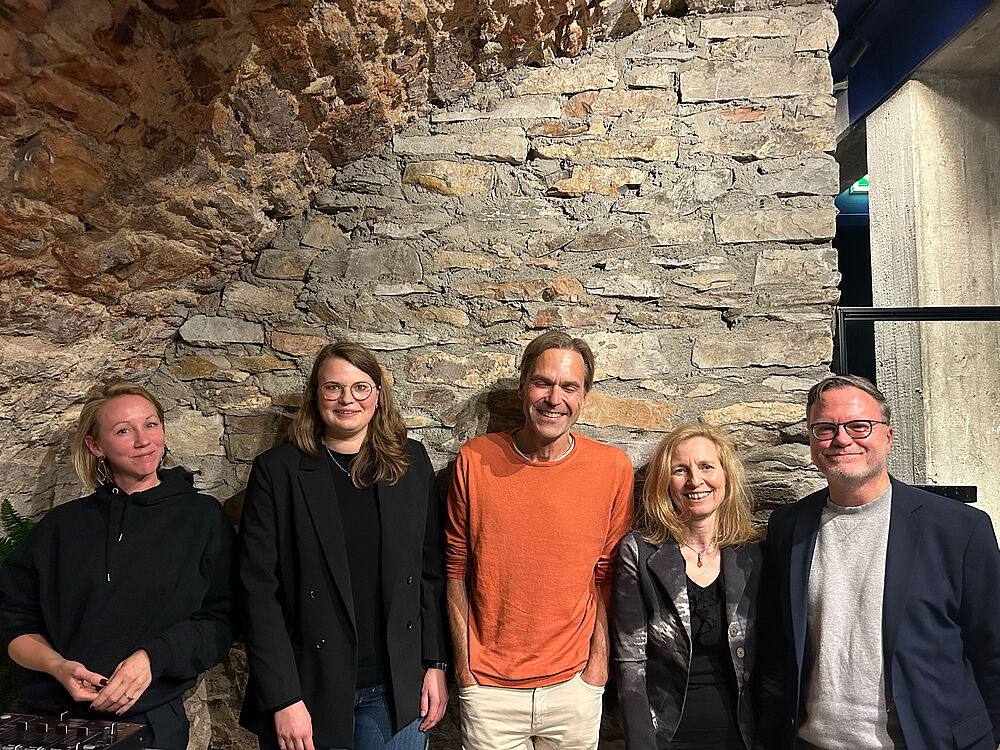
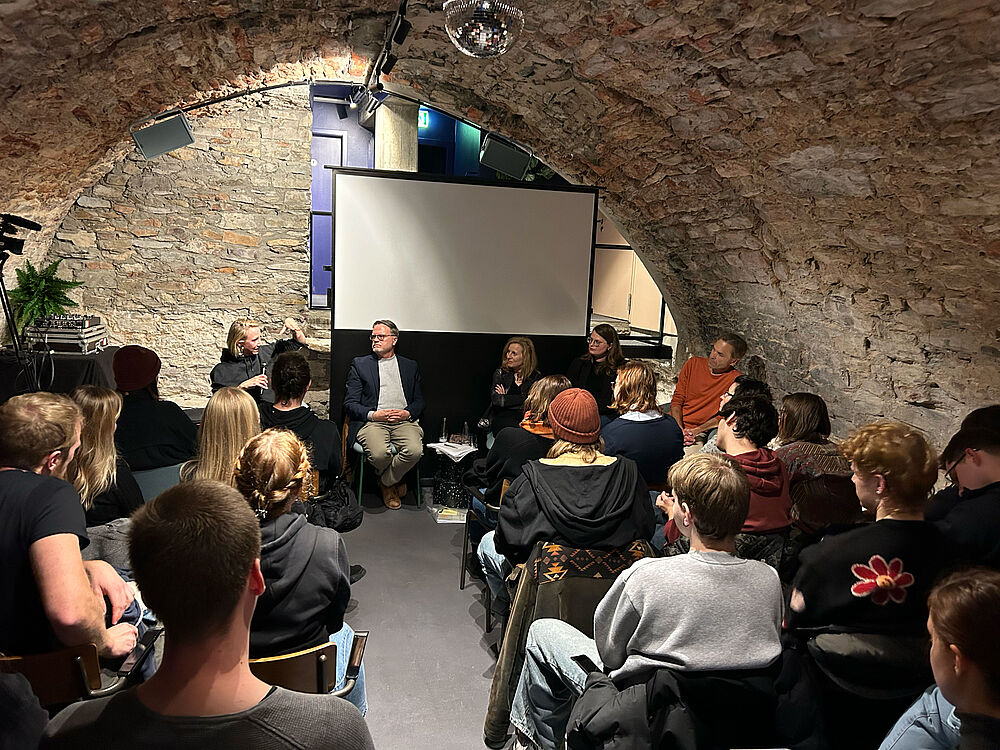
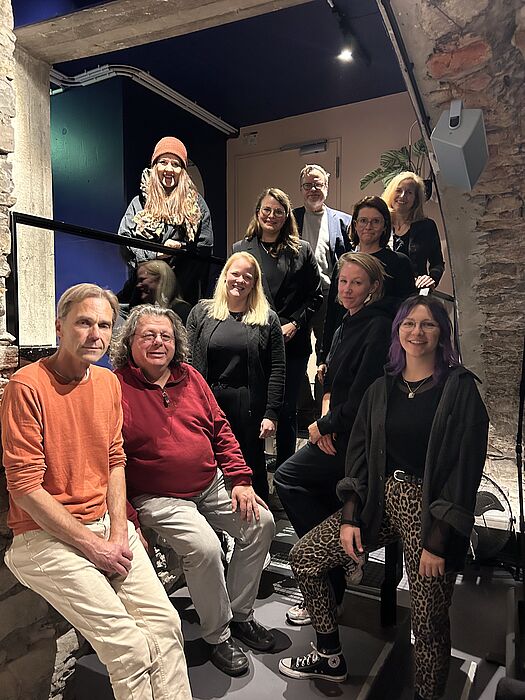
"Politics and pop have always used each other. But this has led to problems in recent years, which have become more apparent than ever in this US election campaign, which has long since become a pop spectacle, because the fact that we still assume that pop has the political gesture, the counter-movement moment, which it no longer has, and that politics today functions and is staged according to pop cultural patterns and attention-grabbing rules, means that election campaigns no longer have any content, but only produce emotions and scandals in order to create identity. And so the candidate with the most conspicuous diss track wins." With this provocative conclusion, journalist Laura Ewert (Der Spiegel, taz, Die Zeit, Rolling Stone, among others) summarised the panel discussion "The case of the USA: democracy between pop and populism, between negotiation and riot" on Tuesday evening, which took place as part of the lecture series "Ver:achtsamkeit: Ethik der Popkultur" of the C:POP research centre this time in the very well-attended "gwlb" in Paderborn city centre. In addition to Laura Ewert, Prof. Dr Peter Fäßler, contemporary historian at the UPB's Institute of History, Dr Alexandra Hartmann from the Institute of English and American Studies (American Studies field) and Prof. Dr Annegret Thiem from the Institute of Romance Studies took part in the discussion, which was moderated by Prof. Dr Christoph Jacke.
The debate focussed on topics such as pop un politcis/policy/polity, populisms and the popular and politics, politainment vs. political/politicised pop or stars and figures. The participants examined conventions, traditions and (re)breaks in political communication, particularly in relation to the current US election campaign. A particular focus was on the comparison of political staging in the USA, Latin America, Europe and Germany, whereby popular figures and stars from politics were also discussed or whether and to what extent stars dictate election content (e.g. Donald Trump, Kamala Harris and the superstars of pop music or slogans such as "Kamala is Brat").
After a very lively and entertaining discussion on admittedly serious topics, the audience was actively involved in the last section, so that the different perspectives of the guests and the questions of the audience were addressed in equal measure. The lively debate highlighted the extent to which the boundaries between pop culture and political discourse have shifted, the impact this has on the perception of politics in today's society and the need for categorising journalistic and academic criticism.
Prof Dr Peter Fäßler on the evening: "Entertaining, stimulating, constructive and fresh - I heard some thoughts that were new to me. The perspective of 'Trump as a pop-cultural figure' makes sense."
The event is supported by the University Society, among others, and internal seminar sessions of the four participating institutes and degree programmes will take place over the next two weeks before the public event continues on 26 November with a lecture by musicologist and cultural anthropologist Laura Schwinger on the topic of "Overload vs. overlord - mindfulness between coping with everyday life and legitimising power" in lecture hall C1 at the UPB.
Text: Tina Götz