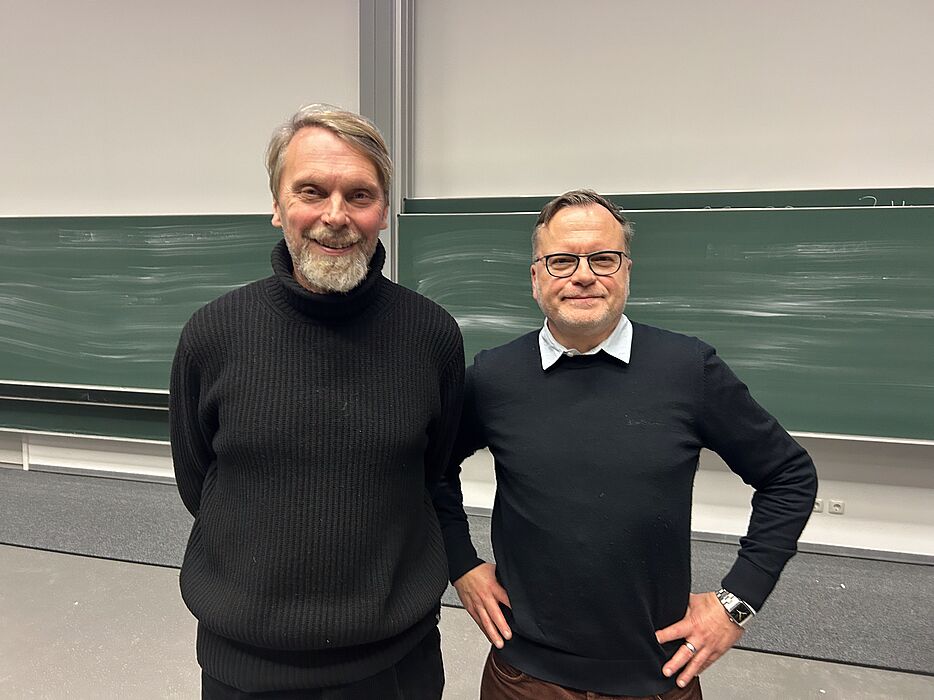
Jens Balzer (Die Zeit, Rolling Stone, C:POP), "After Woke: pop culture and the progressive left after their moral bankruptcy on 7 October", impulse and talk
On Tuesday 15 October, the well-known cultural and music journalist and C:POP member Jens Balzer was a guest at C:POP in the lecture series "Ver:achtsamkeit" and gave a lecture on the topic of "After Woke: pop culture and the progressive left after its moral bankruptcy on 7 October", in which he followed up on the contents of his new and much-discussed book "After Woke", which was published at the end of August.
The starting point of Balzer's lecture was to question why, immediately after the terrorist attacks by the radical Islamic Hamas in autumn 2023, the expected expressions of solidarity from the so-called "woke" movement, which usually opposes social grievances and supports marginalised groups, surprisingly failed to materialise. According to Balzer, the silence of the club scene, which usually shows solidarity after attacks on places of culture and freedom, such as the Bataclan in 2015 or the Pulse club in 2016, was particularly striking. But after the massacre at the Supernova festival, in which 365 peaceful revellers were killed, silence prevailed.
Balzer addresses this silence as the starting point for his reflection on the state of the Wokeness movement after 7 October 2023, pointing to the droning silence and the anti-Semitic slogans that were sometimes raised at Western universities in the weeks that followed. Balzer recognises this as an alienation of Wokeness from its original ideals. According to Balzer, it seems that the movement has reached a point where it is exposing itself - no longer as a moral authority, but as an intellectual fad of an academic elite that is increasingly distancing itself from reality.
Nevertheless, according to Balzer, it is not time to bury the movement altogether. On the contrary, he explicitly speaks out against new right-wing currents that capitalise on the movement's weaknesses and urgently pleads for a self-critical return to the original goals of wokeness: the examination of language and behaviour for racist stereotypes and the fight against injustice. His vision calls for a return to the original impulses of the woken, postcolonial, queer-feminist left, including a dynamic concept of identity and culture.
Balzer himself after his lecture: "My wish is that those who are currently not talking to each other, especially within the pop-cultural left, enter into dialogue again and examine whether their different perspectives are really irreconcilable. In addition, all those who advocate anti-authoritarian or queer-feminist, postcolonial, woke causes should question whether they are unconsciously co-operating with authoritarian forces. Today's audience showed through their interesting questions that the topic is also of concern to those who may not share my position."
Balzer will certainly be coming back to Paderborn University soon as a C:POP member, lecturer or speaker.
Text and photos: Tina Götz