
Projects

In the BBNE Hubs project (networks of vocational education for sustainable development), existing and already tested educational interventions from successfully implemented pilot projects are transferred and further consolidated.
In the BBNE Hubs project, existing and already tried and tested educational interventions from successfully implemented pilot projects are transferred and further consolidated. These are (here only the acronyms): Pro-DEENLA, NaReLe, KoProNa, TransSustain and TraNaxis. (three of the projects have been recognised as sustainable networks by the German UNESCO Commission)
In a first step, two existing regional BBNE networks (BBNE hubs) will be expanded with experienced actors from the previous projects and new partner institutions in the regions of East Westphalia (NRW) and Thuringia.
In a second step, a new BBNE network will be established in the Schleswig-Holstein region with new partners and stakeholders. The BBNE networks in East Westphalia and Thuringia will serve as adaptation templates and good-practice models.
The overarching goal of the BBNE hubs developed and established in the project is to strengthen the sustainability-related professional skills of company training and further education staff. To this end, a training concept that has already been developed and tested (from the TraNaxis project) will be used to qualify training and further education staff. The double multiplier approach developed here (further information can be found here in the project publication) will be further consolidated in practice by organising train-the-trainer courses (further education staff) and developing and establishing trainer pools for the three BBNE hubs. The qualification of company training personnel is ensured by the qualified trainers and implemented in a market-based manner by cooperating chambers and educational institutions (IHKs, HWKs and IHK training academies). The certificate course "Sustainability Officer for Training (IHK)" developed and tested in TraNaxis serves as a template for this(click here for the current range of courses offered by the IHK Academy East Westphalia).

The central objectives of the project are to combine research on formal learning in (higher) education or training with research on learning in the workplace in order to develop new research methods and to broaden our own perspective through international cooperation. The focus is to be placed in particular on pupils in different types of school, as previous research projects have so far focussed primarily on vocational training. The findings of the project should ultimately serve to plan future research projects within the framework of the EU research agenda in a more efficient and targeted manner.

With the introduction of a monitoring system, the station missions expect to experience lasting relevant changes in their target groups, the social framework conditions and their effects on their living conditions. Monitoring is also intended to improve internal management processes and enhance the quality of the services offered to users of the station missions. In this sense, evidence-based monitoring aims to systematically develop the organisation of station missions.
The standardised nationwide monitoring process systematically collects the experiences and findings from the work of the station missions. The results are compared with relevant results from social reporting, evaluated and weighted by comparison.
The project is being carried out by the former IN VIA SoWiFo and supervised and supported by the AG Bildungsmanagement und Bildungsforschung in der Weiterbildung.
What will skills profiles and continuing education programmes look like for the labour market of the future? The education management group is investigating this research question and is working with a company to develop sustainable concepts and best practice models for efficient digital training. The AWARE project is being carried out by the leading-edge cluster it's OWL.

Work 4.0 sub-project: Culture of the learning organisation as an HR strategy
The digitalisation of the world of work not only has an impact on production and work equipment, but also on training and further education. The high flexibility of production technology and the resulting complexity of the production process place high demands on the knowledge and expertise of the workforce. Knowledge management and further training strategies must adapt to these new conditions.
As part of the Fortschrittskolleg "Gestaltung von flexiblen Arbeitswelten - Menschenzentrierte Nutzung von Cyber-Physical Systems in Industrie 4.0", the group is investigating the influence of a corporate culture that promotes learning on employees and the impact on the successful implementation of digital change in the world of work.
Further information here.

We are currently working in collaboration with the University of Regensburg(Gruber Research Group) on the replication of classic chess experiments from expertise research, in which test subjects of different chess playing levels are asked to remember and reproduce chess positions that are shown to them for five seconds at a time. Experts outperform novices and amateurs in such memory performances due to their superior knowledge structures and experience. The novelty of our research set-up lies in the recording of eye movements, with the help of which the use of special knowledge structures ("chunks") is to be demonstrated.


In teaching-learning and expertise research, data beyond self-reports is becoming increasingly important. As a result, the recording of eye movements is gaining more and more attention. Eye movements can be interpreted both as a prerequisite for the absorption of information and as the result of information processing. By comparing novices and experts, new experimental approaches can be pursued with the help of eye movement studies.
The group is currently focussing on the replication of classic expert studies. The eye-tracking laboratory is located in TP21.2.36.

The aim of the project is to empirically analyse the effect of continuing education programmes offered by various continuing education institutions on the participants' gainful employment. The project has two main objectives:
- To gain scientifically and socially usable findings on the impact of continuing education programmes and to clarify the role of theoretically derived influencing variables on the assumed causal relationships.
- The summative evaluation of the seminars investigated, which should enable the training providers to legitimise their training courses on the one hand and allow empirically-based further development of their course offerings on the other.
To achieve these goals, the participants of the individual continuing education courses and their supervisors are surveyed in writing in several waves. Individual personal characteristics, course evaluations, individual experiences of the workplace and assessments of how everyday work demands are dealt with are surveyed. The longitudinal design allows concrete conclusions to be drawn about the effect of the further training programmes while controlling for situational workplace conditions and individual characteristics.
The pilot study took place in autumn 2012 and spring 2013. The main study has been running since autumn 2013.
In terms of content and methodology, the project is being planned and carried out in cooperation with the IN VIA Academy Paderborn (Dr Birgit Marx) and Paderborn University(Prof. Dr Christian Harteis, Dipl.-Hdl. Michael Goller).
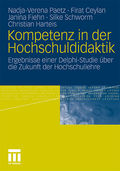
In this three-year project, a future-oriented requirements profile for university lecturers will first be developed in a Delphi study, for which a diagnostic tool will also be developed. This will be followed by a needs assessment at the University of Regensburg and the development of a customised further education programme. This offer will be evaluated with regard to learning success and transfer effects (in cooperation with Dr Silke Schworm and Dr Birgit Hawelka). Duration: 1.12.2008 to 30.11.2011.
Central publication:
Paetz, N.-V., Ceylan, F., Fiehn, J., Schworm, S. & Harteis, C. (2011). Competence in university didactics. Results of a Delphi study against the background of the Bologna reforms. Wiesbaden: VS Verlag für Sozialwissenschaften.

Theoretical and empirical clarification of the role of intuition as a component of professional competence in the context of a review of the international literature and empirical studies in the domains of competitive sport, investment, medicine, music, law and adult education.
Key publications:
Harteis, C. & Billett, S. (2013). Intuitive expertise: Theories and empirical evidence. Educational Research Review, 9, 145-157.
Harteis, C., Morgenthaler, B., Kugler, C., Ittner, K.-P., Roth, G. & Graf, B. (2012). Professional competence and intuitive decision making. A simulation study in the domain of emergency medicine. Vocations and Learning. Studies in Vocational and Professional Education, 5, 119-136.
Harteis, C. & Gruber, H. (2008). Intuition and professional competence: Intuitive versus rational forecasting of stock market. Vocations and Learning: Studies in Vocational and Professional Education, 1, 71-85.
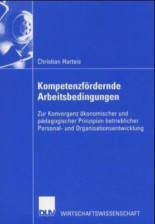
In the period from 1999 to 2003, several empirical surveys were carried out to investigate first the programmatic prerequisites and later the teaching-theoretical prerequisites of vocational skills development and workplace-related learning.
Central publication:
Harteis, C. (2002). Competence-promoting working conditions. On the convergence of economic and pedagogical principles of company personnel and organisational development. Wiesbaden: DUV/Gabler.