As part of the EU research project INNOVADE (http://innovade-democracy.eu) Christian Fuchs has published a new journal article titeled „What is and How Do We Achieve a Resilient Digital Democracy?“
The article asks how democracy can survive in a digital world full of crises, lies, hate, and growing authoritarianism. It says democratic resilience is not a magic system feature, but something people actively build by resisting attacks on democracy and creating fairer rules and institutions.
Digital tools can strengthen democracy – for example through online participation, petitions, citizen assemblies, and protests – but they can also harm it via surveillance, platform monopolies, fake news, deepfakes, and hate speech.
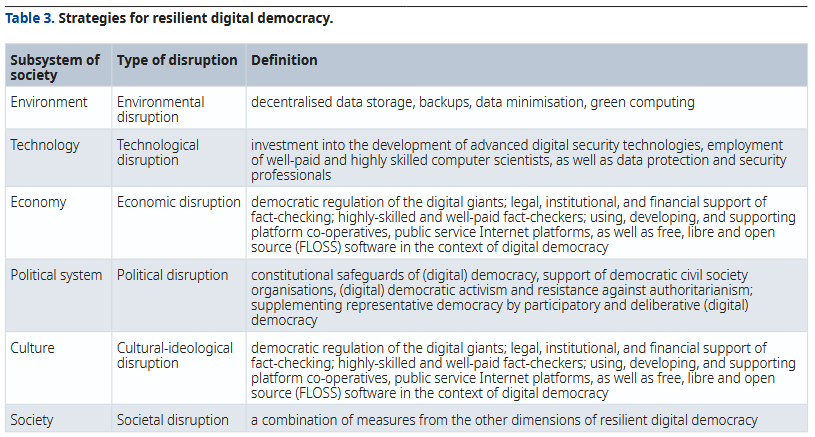
The author argues that resilient digital democracy needs:
• secure, environmentally sustainable digital infrastructures
• strong laws and protections for rights and privacy
• more citizen participation and debate, combining online and offline spaces
• independent, non-profit digital platforms, platform co-operatives, and open-source software instead of Big Tech control
• fact-checking and education to spot manipulation.
Overall, a resilient digital democracy uses technology to protect rights, safeguard demands and support active, informed citizens.
author: Prof. Dr. Christian Fuchs
More information on digital democracy and the EU-project INNOVADE