New Publication: Digital Democracy and Society 2050 – Four Future Scenarios
In their latest publication, Christian Fuchs, Joel Museba and Kevin Friesch explore possible futures of digital democracy and society by 2050. As complex societies are inherently unpredictable, the study combines scenario methodology, STEEP analysis (social, technological, economic, ecological, and political factors), and elements of realist science fiction.
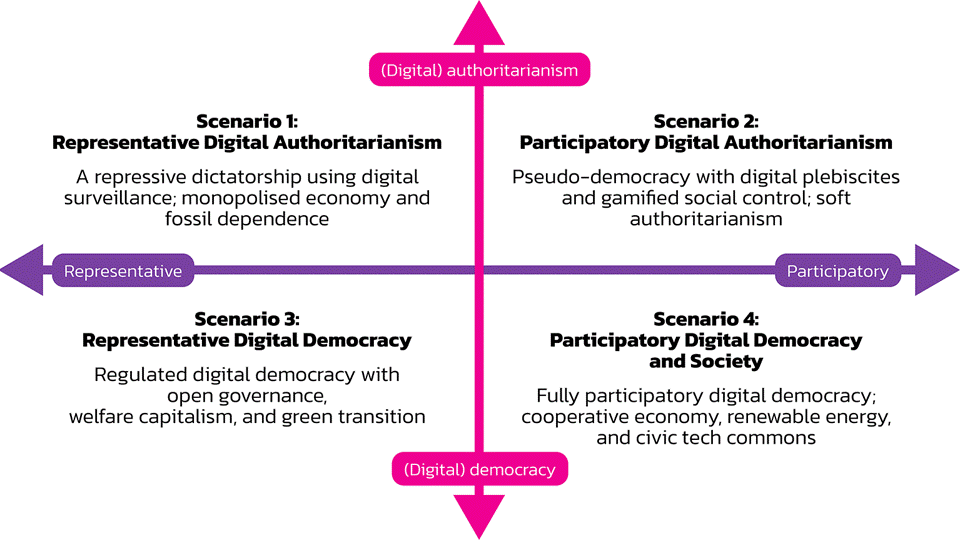
Based on two dimensions—democracy vs. authoritarianism and representation vs. participation—the study develops four scenarios:
- Representative Digital Authoritarianism – digital technologies primarily enable surveillance, control, and power consolidation.
- Participatory Digital Authoritarianism – there is formal participation but it reinforces authoritarian governance.
- Representative Digital Democracy – digital systems support e-government, public services, and institutions.
- Participatory Digital Democracy – digital technologies enable active citizen engagement and democratic innovations
The scenarios examine implications for education, healthcare, economic systems, technological development, and governance. Rather than predicting the future, the publication encourages critical reflection on (un)desirable digital futures and the strengthening of democratic values in an increasingly digital world.
The full article can be read at the following link: The Futures of Digital Democracy: Four ... | Open Research Europe