
Lecture "Den Schein werfen/wahren. Transdisciplinarities and pop culture research" by Prof.in Dr Beate Flath and Prof. Dr Christoph Jacke with Prof. Dr Harald Schroeter-Wittke
Review by Maryam Momen Pour Tafreshi
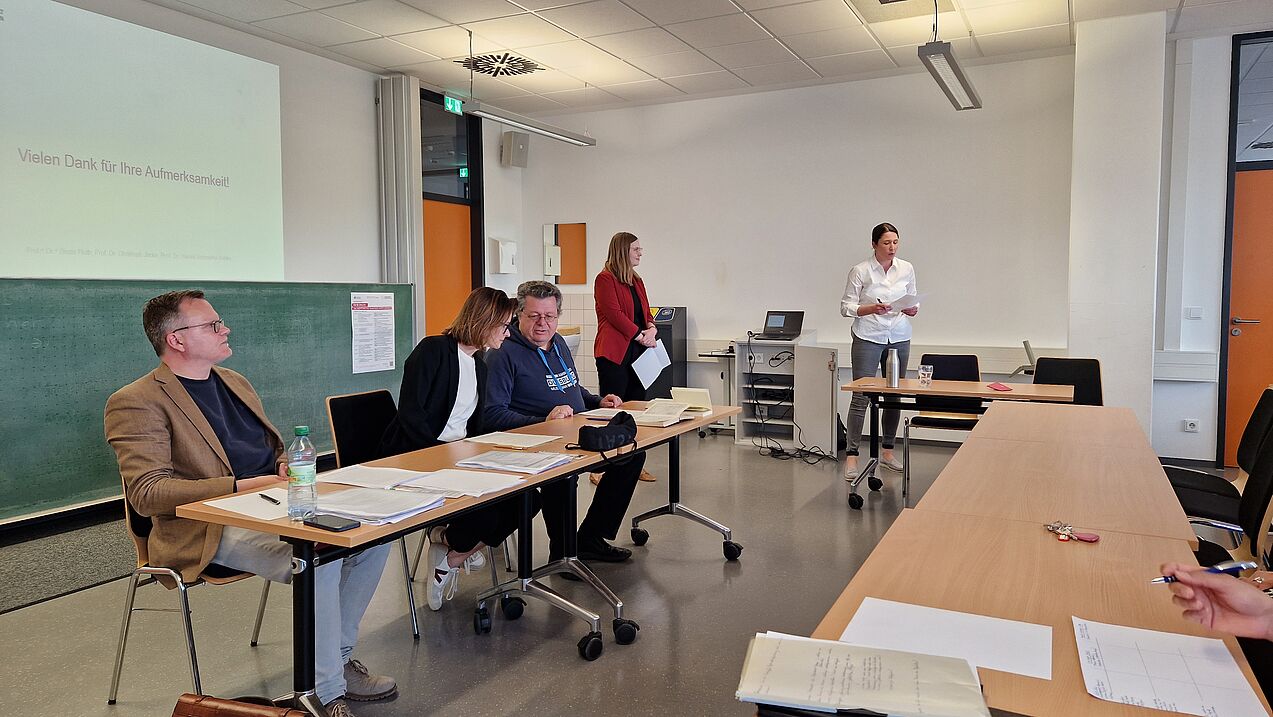
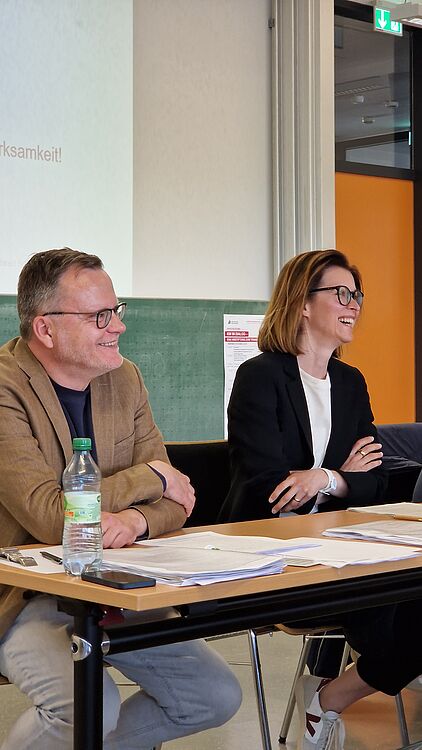
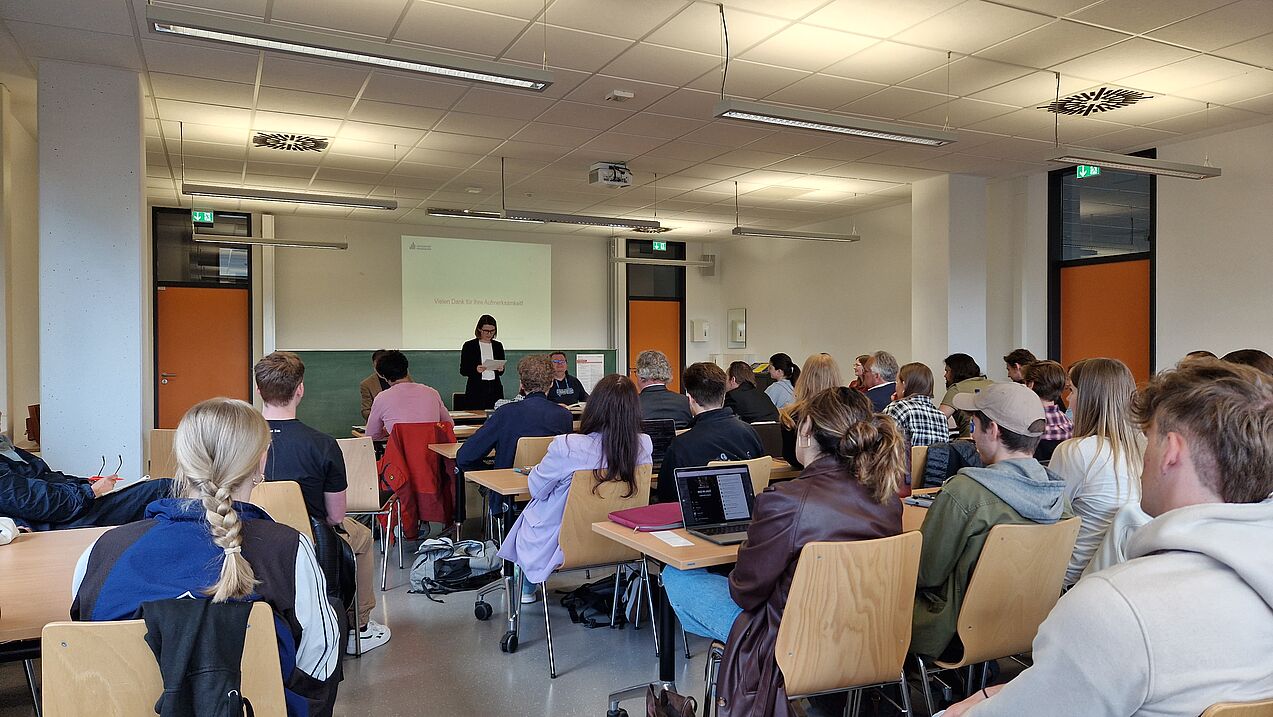
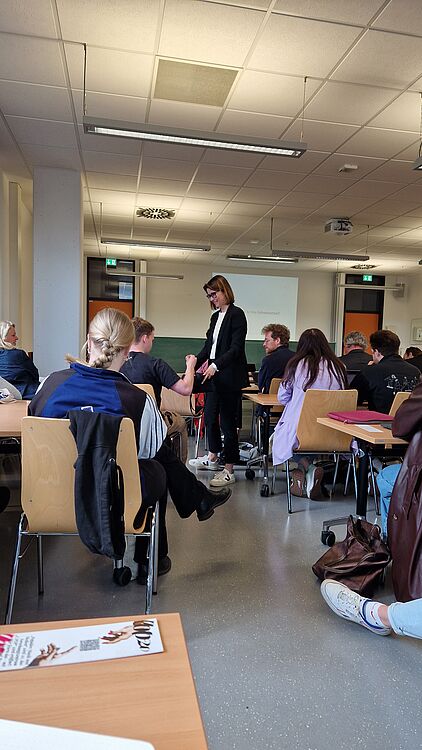
As part of the lecture series "KW in Dialogue - An Incitement to Transdisciplinary Conversation" of the Graduate Centre KW (GKW ), Prof. Dr. Christoph Jacke (Theory, Aesthetics and History of Popular Music), Prof. Dr. Beate Flath (Event Management with a focus on pop music cultures and digital media cultures) and Prof. Dr Harald Schroeter-Wittke(Didactics of Protestant Religious Education with Church History) discussed the topic "Casting/preserving appearances: transdisciplinarity and pop culture research".
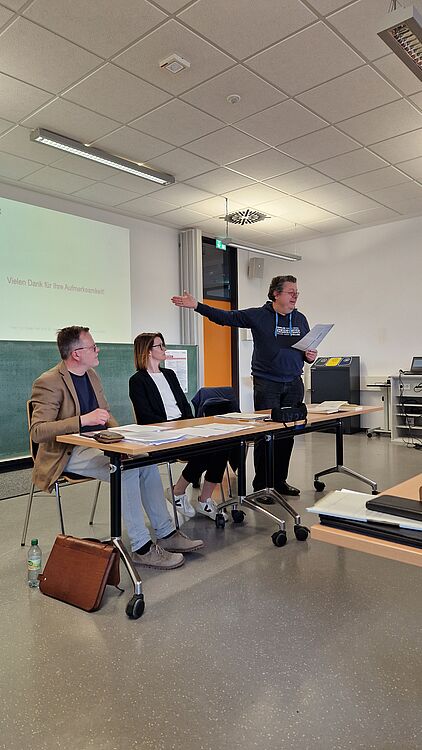
The three lecturers presented a total of nine short impulses in tandem. What was special about this was that texts were not known among the speakers themselves and the order was determined by the audience by drawing lots, which made for interesting - and above all transdisciplinary - cross-connections between the topics. In addition to the numerous pop-cultural and biblical references, which later stimulated intensive discussions, a particular highlight was an embedded vocal interlude by Schroeter-Wittke, who delighted the audience with an imitation of "Et Homo Factus Est" from Beethoven's "Missa Solemnis".
It was clear that this was not the first time the three performers had worked together, but that they are now a well-rehearsed team. Most recently, all three are co-founders and board members of the research institution "C:POP: Transdisciplinary Research Centre for Popular Music Cultures and Creative Economies".
Written by Birk Fischer and Nicolas Thorwesten:
In summer 2023, the "Popular Music and Media" degree programme at Paderborn University will not only celebrate its 20th anniversary, but the new research centre "C:POP - Transdisciplinary Research Center for Popular Music Cultures and Creative Economies" will also be opened. This will be celebrated not only with an anniversary party on 30 June 2023, but also with numerous other events in the run-up ("Pop20").
One of these events focussed on transdisciplinarity. Professors Dr Beate Flath, Dr Christoph Jacke and Dr Harald Schroeter-Wittke gave a lecture entitled "Den Schein werfen - Den schein Wahren Transdisziplinarität von Popmusikforschung" as part of the lecture series "KW im Dialog - Eine Anstiftung zum transdisziplinären Gespräch".
Prof. Dr. Beate Flath is a professor of event management with a focus on pop music cultures and digital media cultures and has often worked with both Prof. Dr. Christoph Jacke, who was appointed Professor of Theory, Aesthetics and History of Popular Music in 2008 and has headed the "Popular Music and Media" degree programme at Paderborn University since 2011, and Prof. Dr Harald Schroeter-Wittke, who has held the Chair of Protestant Religious Education with a focus on religious didactics and church history at Paderborn University since 2003 and has also been a member of the Presidium of the German Protestant Church Congress since 2003.
In their lectures, the professors presented nine short impulse texts that they had prepared in advance. What was special: The texts of the individual speakers were not known to the others beforehand and the order in which the texts were presented was only decided by the audience during the event. Only the first text, written by Prof Dr Schroeter-Wittke, and the last text, written by Prof Dr Beate Flath, provided a framework for the content.
Precisely because of the circumstances just mentioned, there were always some cross-connections between the texts of the speakers within the lecture, which expressed the different perspectives, but also overlaps, of the various disciplines. One central concept that was repeatedly taken up was that of the "fake". The term "fake" was interpreted from text to text and redefined or further defined, so that an image of this word emerged that went beyond the three subject areas of the professors.
In her text "Pop im Scheinwahrerlicht oder Pop und Fake", Prof Dr Beate Flath explained the often negative connotation of the term fake in today's world. When you hear the term "fake" today, it is usually understood as something negative. Fake news, the deception of others with targeted false information to influence their opinion. In the pop and event sector, however, fakes are used as a "fun game with reality". The staging of artists on stage with light, sound and effects technology. Playing with fakes and their fakes are essential for the creation and experience of being lifted out of everyday life and the "re-enchantment of everyday life".
In his text "Fake - science is fact-based, but what are facts?", Prof Dr Harald Schroeter-Wittke looks at the etymology of the word fact. The term is derived from the Latin facere, meaning to do, to make. Facts are therefore not given like data, they are made by people. So facts can also be understood as fakes, they live from the trust that people place in them. Prof Dr Schroeter-Wittke argued that we need an ethics of science and people who question the given facts.
In his text "Seemingly superficial - pop and paradigmatics", Prof Dr Christoph Jacke follows on from Prof Dr Beate Flath's remarks and also addresses the staging of politicians and politics in general. In his text, he emphasises, among other things, that the development towards self-staging politicians was already foreseen more than 30 years ago by Umberto Eco. The recently deceased Silvio Berlusconi was one of the first politicians to use fakes for self-staging purposes. Here, however, the effects are real, unlike in pop. These politicians have played a significant role in the negative connotation of the word fake.
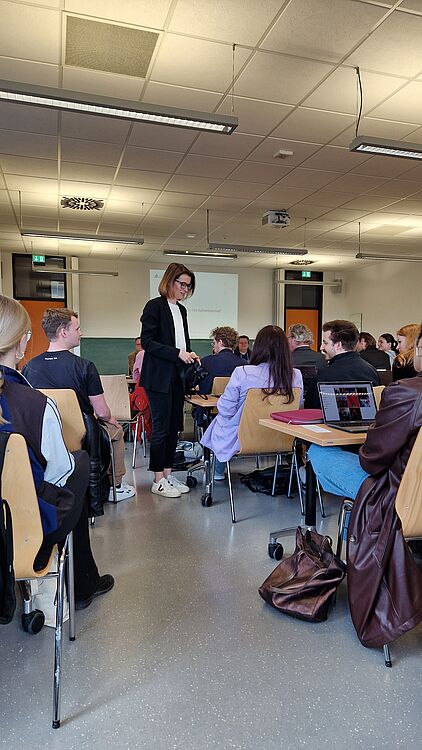
The students from the seminar "Pop music journalism: between ego trip and advertising" by Prof. Dr. Christoph Jacke, who listened to this event as part of their seminar, were able to recognise parallels that they had previously dealt with in models by various authors* in the seminar. Texts from communication science in particular, such as those by Prof Dr Klaus Merten (Effect of the media) or Prof Dr Siegfried J. Schmidt and Prof Dr Guido Zurstiege (Communication science - systematics and goals), made it easier for the students to follow the common thread through the various successive texts and their formats and to establish a common denominator, that of the "fake".
These different approaches and perspectives ultimately resulted in a wide-ranging picture, the complexity of which can only be achieved through transdisciplinary exchange. The success of this concept depended on the fact that all the professors had worked together before and were familiar with each other's way of expressing themselves. For the listeners, this meant that different academic levels had to be followed in order to understand the consensus of all the texts.
Against this background, the event made it clear why the founding of the research centre "C:POP. Transdisciplinary Research Center for Popular Music Cultures and Creative Economies", in which both Prof. Dr Beate Flat and Prof. Dr Christoph Jacke will be represented on the board, is necessary in order to further advance research in the field of cultural studies and popular culture.