
Clearing office of the Graduate Centre of the Faculty of Cultural Studies
A clearing office has been institutionalised at the Graduate Centre KW, whose members are elected by the Faculty Board. The members of the Clearing House are available to the members of the Graduate Centre (i.e. all doctoral candidates of the Faculty of Arts and Humanities, all academic staff of the Faculty of Arts and Humanities, all professors of the Faculty of Arts and Humanities) as contact persons. They advise the members and support them in finding solutions to problems that arise in connection with the further academic qualification of graduates and cooperation with university lecturers. The clearing office can refer to the Paderborn University's conflict counselling service.
3 questions to Ingrid Scharlau
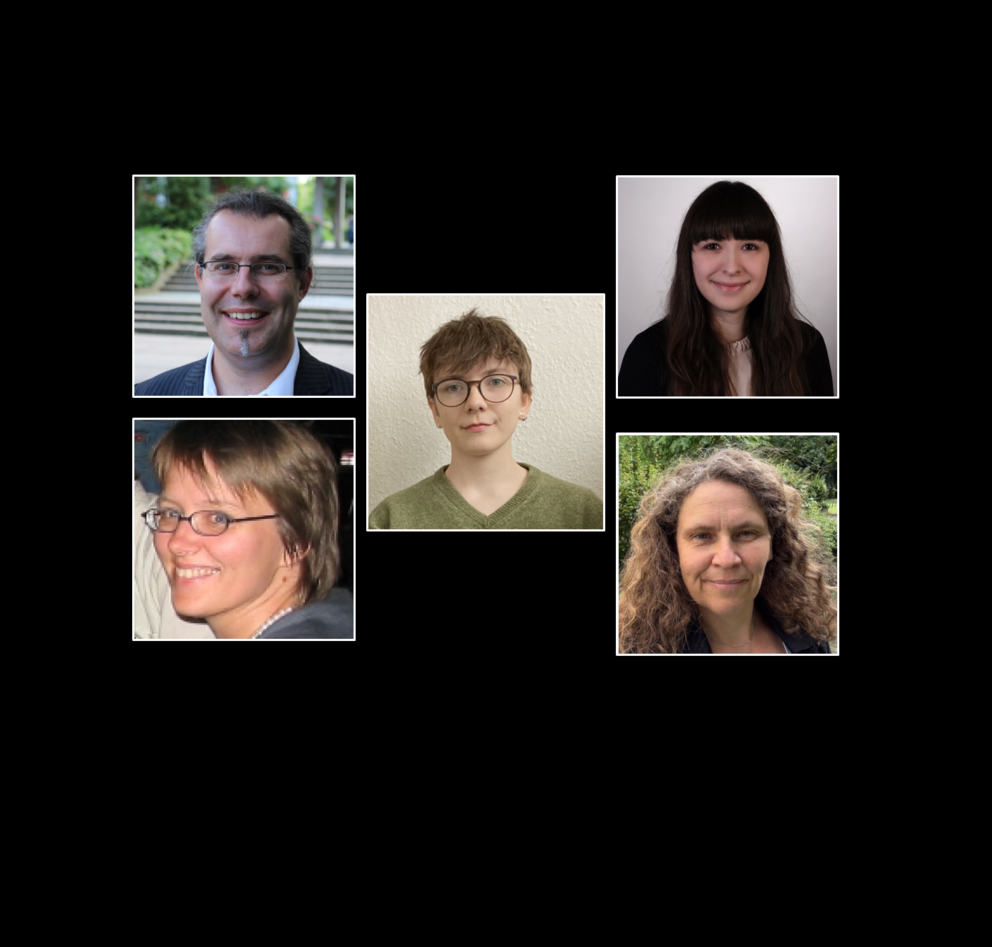
How do you understand your role as a member of the clearing centre?
Perhaps the description "irritation solver" comes closest to my understanding. If I could wish for it, I would be approached above all when people experience irritation or feel insecure. Many problems in the doctoral phase arise because the rules for doctoral supervision are largely unwritten. In addition, they can differ greatly between subject areas and disciplinary cultures (and also between individuals). The hierarchical and dependent situation of doctoral candidates exacerbates this uncertainty. I would like there to be a place and people to whom you can ask questions about these irritations and with whom you can discuss your experiences.
Of course, I am also there when actual problems or conflicts have arisen. Then I first try to understand the conflict with the person and clarify their goals. Moderation can then be sought.
But: As a psychologist, I am used to getting "help" at an early stage. The word is in inverted commas here because it is not intended to signal that you can't do something on your own. What I mean is: talking to a colleague I trust at an early stage to clarify my thoughts and feelings, to get a different perspective, maybe even a tip. That's why I really want the clearing centre to offer early help as well as resolving irritations.
Why is working at the clearing centre important to you?
The work at the clearing centre is important to me because I believe that there must be a low-threshold way to talk about any problem.
I have been running the mentoring programmes for women at the university for a long time and know from them how beneficial it is to be able to talk in a confidential setting. I would also like to offer this elsewhere. Places to discuss and exchange ideas, including solidarity, are absolutely essential.
Where do you see the strengths of counselling by the clearing centre?
The clearing centre is close by. You talk to members of the faculty, you can choose between different status groups, nobody is dependent. All decisions lie with the people who come to us. We are interested in finding solutions that are good for everyone involved.
Understanding of roles
The clearing centre sees itself as a bridge builder, on the one hand in the sense of helping people to help themselves and on the other hand as a bridge builder to other contact points that also offer support options. The members of the clearing centre are therefore process facilitators in counselling and/or conflict situations and see their role as process counselling. Assistance and options for action are developed together. The decision-making authority in the implementation is always the responsibility of those seeking advice.
Typical examples of issues raised in counselling sessions
PhD students/staff
We support you in dealing with the psychological and interpersonal challenges of the PhD process. These may include, for example, acute doubts and crises, balancing your private life with your research, and support with conflicts in the university working environment or within academic power structures. None of these issues need to have fully manifested yet – preventative work is very important to us.
Possible areas of focus might include, for example:
- supervision agreement
- Doubts and uncertainties regarding the quality of supervision
- Doubts and uncertainties regarding research tasks
- Doubts about the PhD/the process of doing a PhD
- Social issues: conflicts, friction (the PhD and family dynamics, conflicts with one’s family of origin, for example, among first-generation academics)
- Potential abuse of power
- Potential bullying
- Dealing with (unwritten) rules
- When questioning the purpose (doubts about pursuing a PhD) Existential concerns (chains of fixed-term contracts, fears about the future, etc.)
- Decision-making during periods of transition (e.g. discontinuing a PhD, changing chairs)
Typical examples of issues for which people seek advice
Line managers/professors
We are here to support you, particularly in challenging supervisory relationships and in the event of (potential) conflicts with staff members or colleagues. None of this needs to have come to a head yet – preventative work is very important to us.
Possible areas of focus could include, for example:
- Reflection on team structures
- Developing a productive working environment for doctoral candidates
- Dealing with (unwritten) rules
- Dealing with difficult staff members / managing conflicts with and complaints about staff
- Doubts and uncertainties regarding the quality of staff members’ work
- Problems with colleagues
- Social issues: conflicts, friction
- Potential abuse of power
- Potential bullying
Typical examples of issues for which people seek advice
Students/student assistants
We support student staff at the Faculty of Arts and Humanities with any issues arising from their employment and help them navigate the duality that arises from their dual roles as students and staff members. We also offer advice on other matters. Please feel free to get in touch if you have any questions. Alternatively, you can contact the representative body for student assistants with any concerns you may have.
Possible areas of concern might include, for example:
- Uncertainties and conflicts in the employment relationship: e.g. role conflicts with supervisors and teaching staff who are also students; potential abuse of power
- Unclear tasks and work processes
- Dealing with (unwritten) rules
General conditions
The members of the clearing centre offer both digital and face-to-face consultations. They have access to a room outside the "usual office corridors" (but on the UPB campus) that is not labelled as such.
All contents of the counselling sessions are confidential and will of course not be passed on to third parties.
Follow-up appointments can also be arranged on the basis of the initial meeting. Individual agreements on the frequency of further meetings are therefore possible.
The work of the clearing centre is confidential. Information is only passed on after consultation. The contact person from the clearing centre can be chosen freely.
Contact us

If you would like to send an e-mail to one or more members of the clearing centre at GKW, please note in the subject line: Clearing.
University lecturers

Mentor for Teachers in Training - Professor
Office: H4.129
Phone: +49 5251 60-2900
E-mail: ingrid.scharlau@uni-paderborn.de
Professor - Forschung und Lehre im Bereich der Theorie und Didaktik der Geschichte
Office: N4.311
Phone: +49 5251 60-2931
E-mail: meyer.hamme@uni-paderborn.de
Academic employees

Manager - Research Associate - Geschäftsführung ZeKK
Office: N4.347
Phone: +49 5251 60-4527
E-mail: sarah.lebock@uni-paderborn.de

Teacher for Special Tasks
Office: H4.236
Phone: +49 5251 60-4201
E-mail: petra.westphal@uni-paderborn.de

Guidelines for respectful cooperation
We would like to take this opportunity to draw your attention to the guidelines for respectful cooperation at Paderborn University and for protection against disadvantage, discrimination, sexualised violence and bullying.