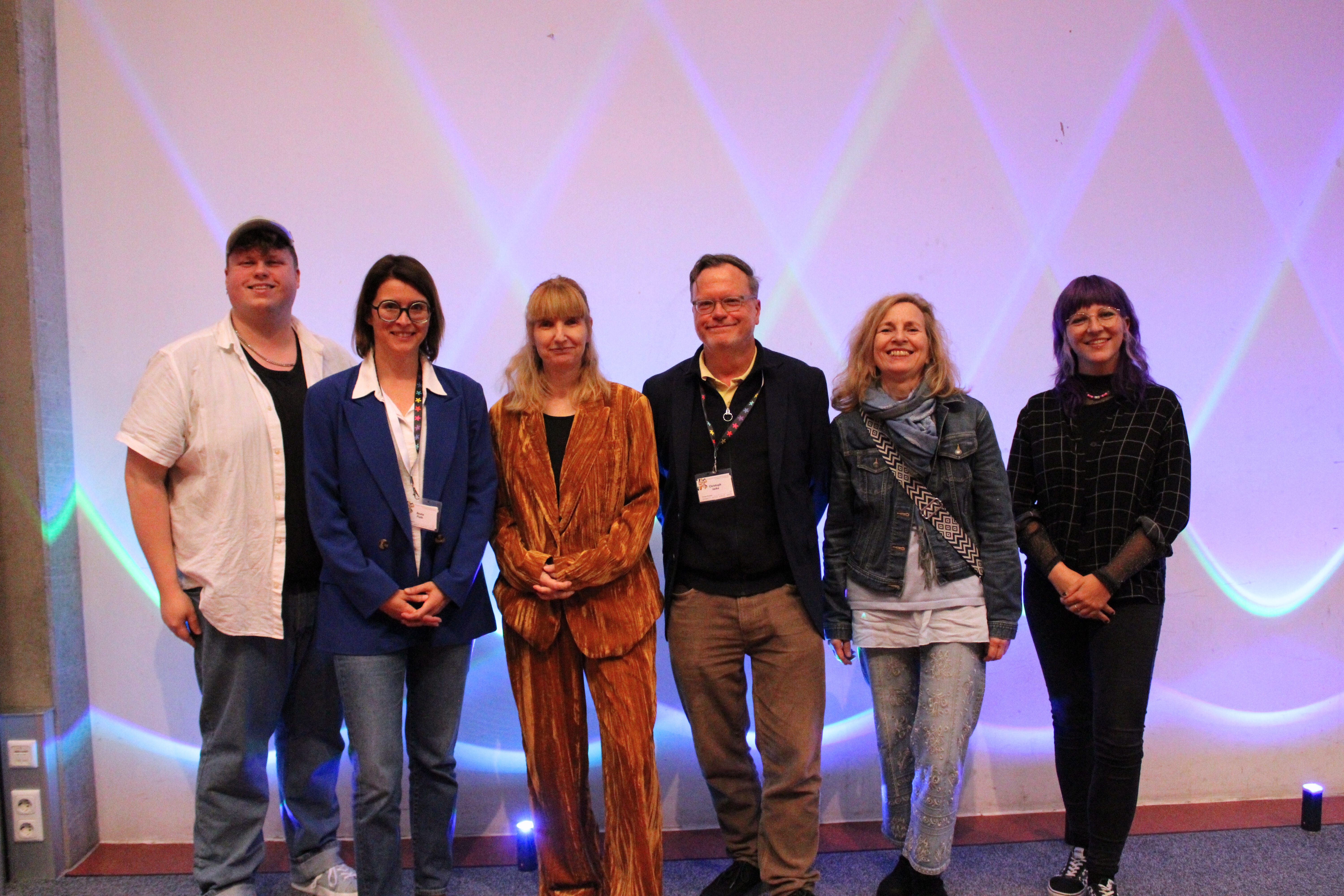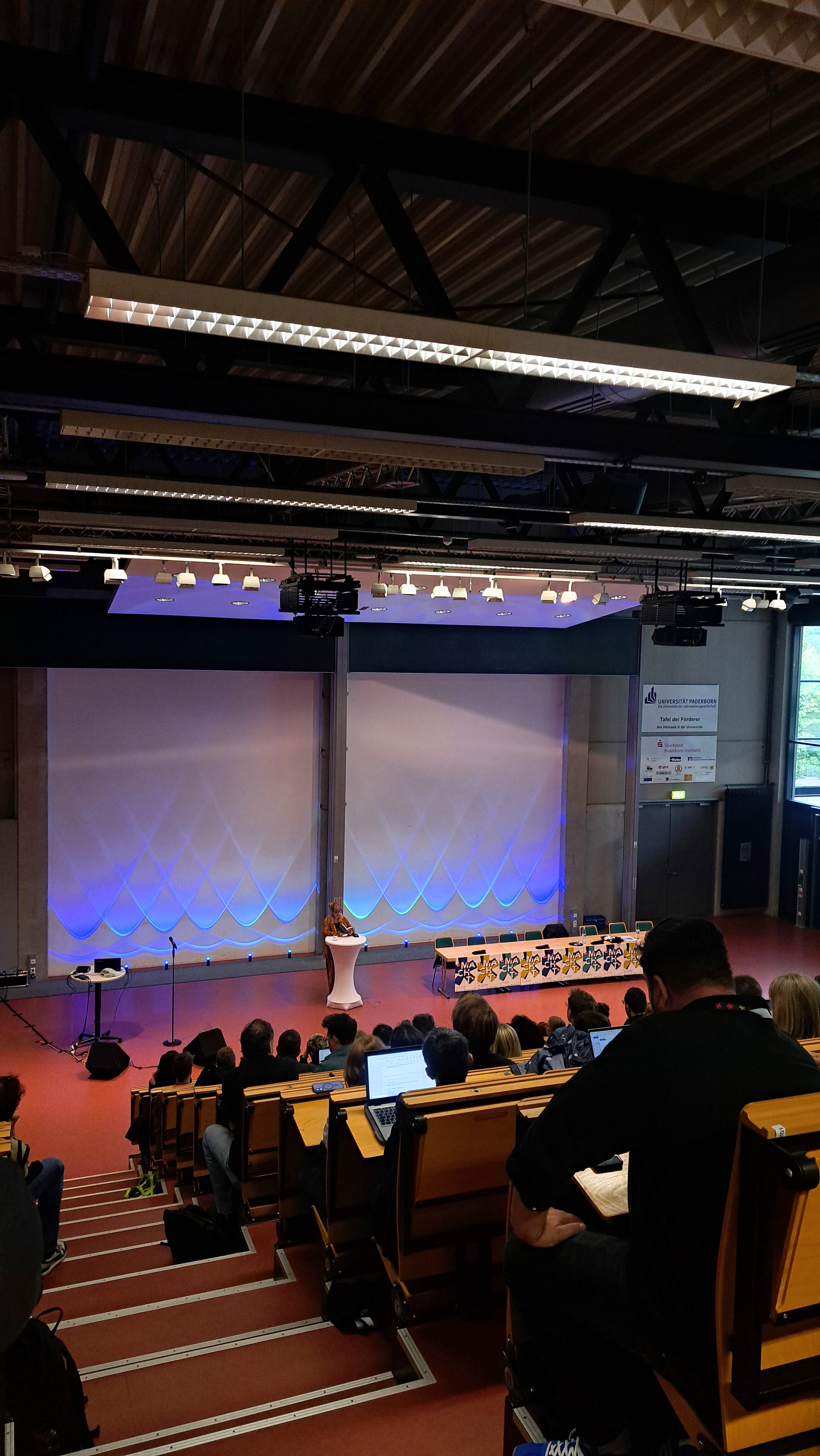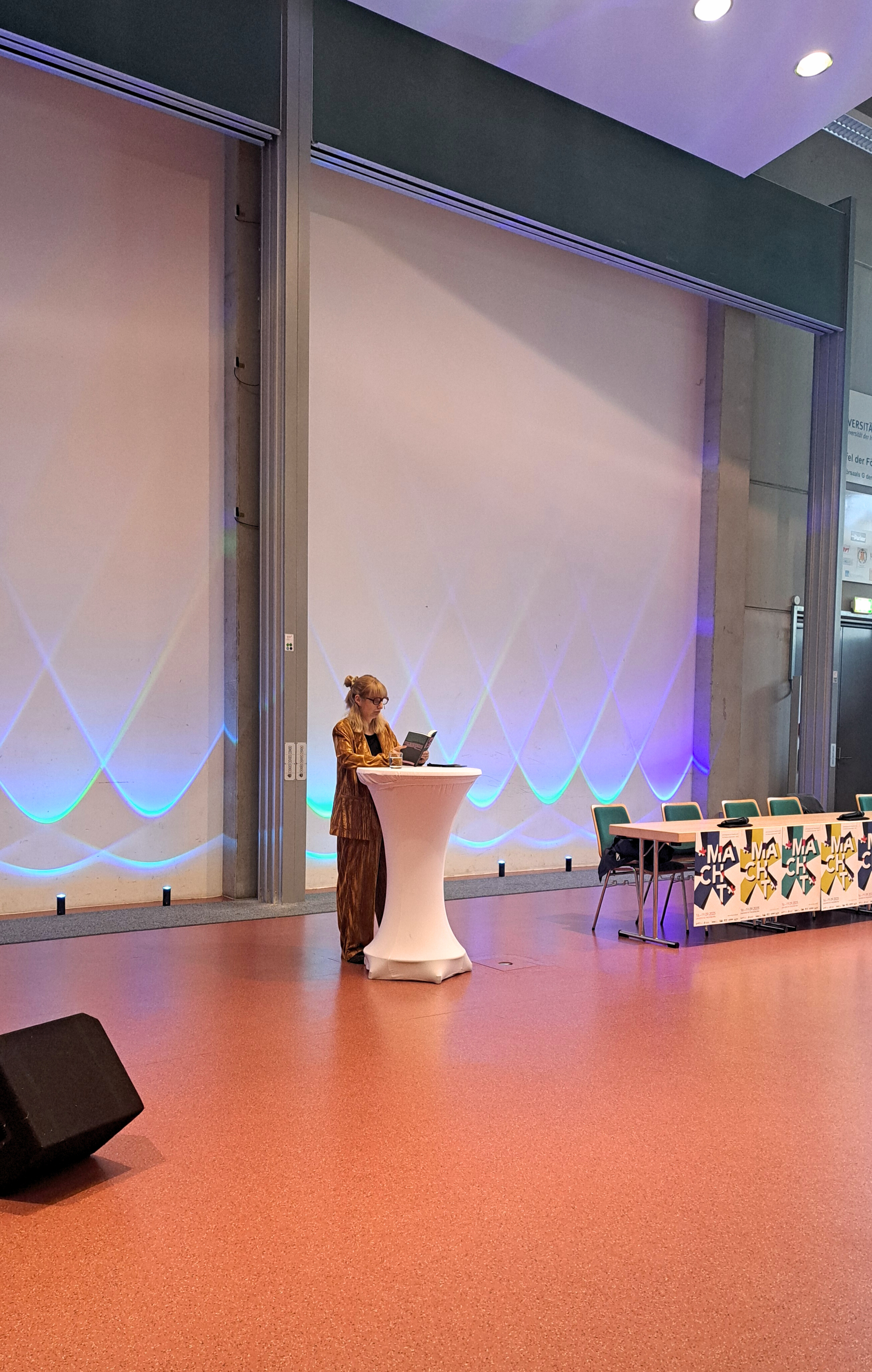
The Annual Congress of the Society for Media Studies (GfM) took place this year at Paderborn University. In addition to numerous panel talks, discussions, lectures and other contributions, the research centre C:POP (Transciplinary Research Center for Popular Music Cultures and Creative Economies) invited the advisory board member, former pop lecturer and editor of "Missy Magazine. Pop, Politics and Feminism", Sonja Eismann, for a reading of her recently published book "Candy Girls - Seximus in der Musikindustrie" (Nautilus Verlag). In front of a large audience of around 200 people, consisting of members and conference guests of the GfM, members of C:POP, UPB students and interested members of the public, the Sonja Eismann presented several chapters from her book.
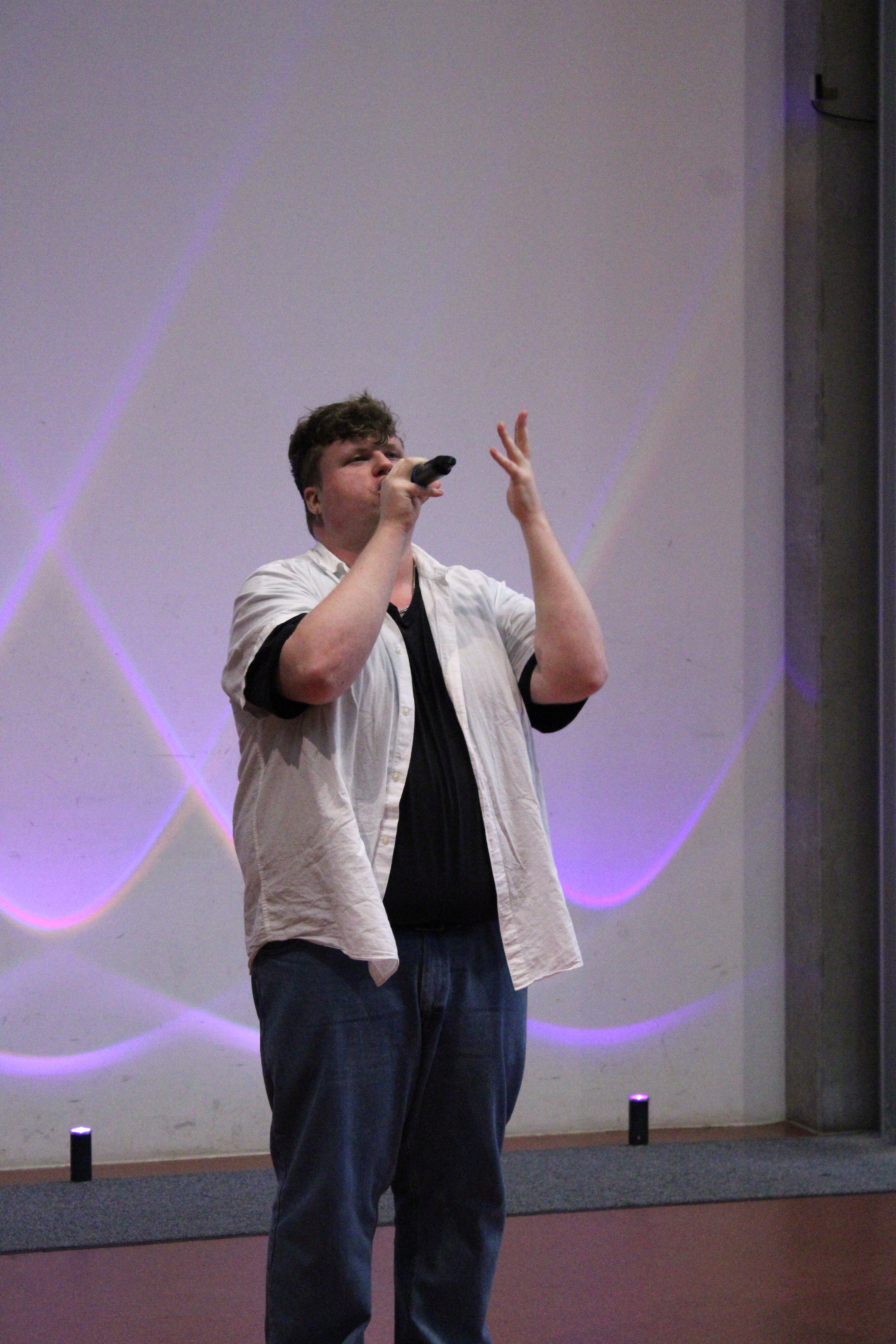
The reading was accompanied by Charlie Mio Marlin, freelance author, artist and former student of the bachelor's programme "Popular Music and Media" at UPB. The event opened with the song “Apocalypse Wow” with an energetic but dystopian touch to it. They later said that this was one of the first songs they had written themselves, and other pop students recalled earlier performances by Charlie on H8 in the university rehearsal rooms.
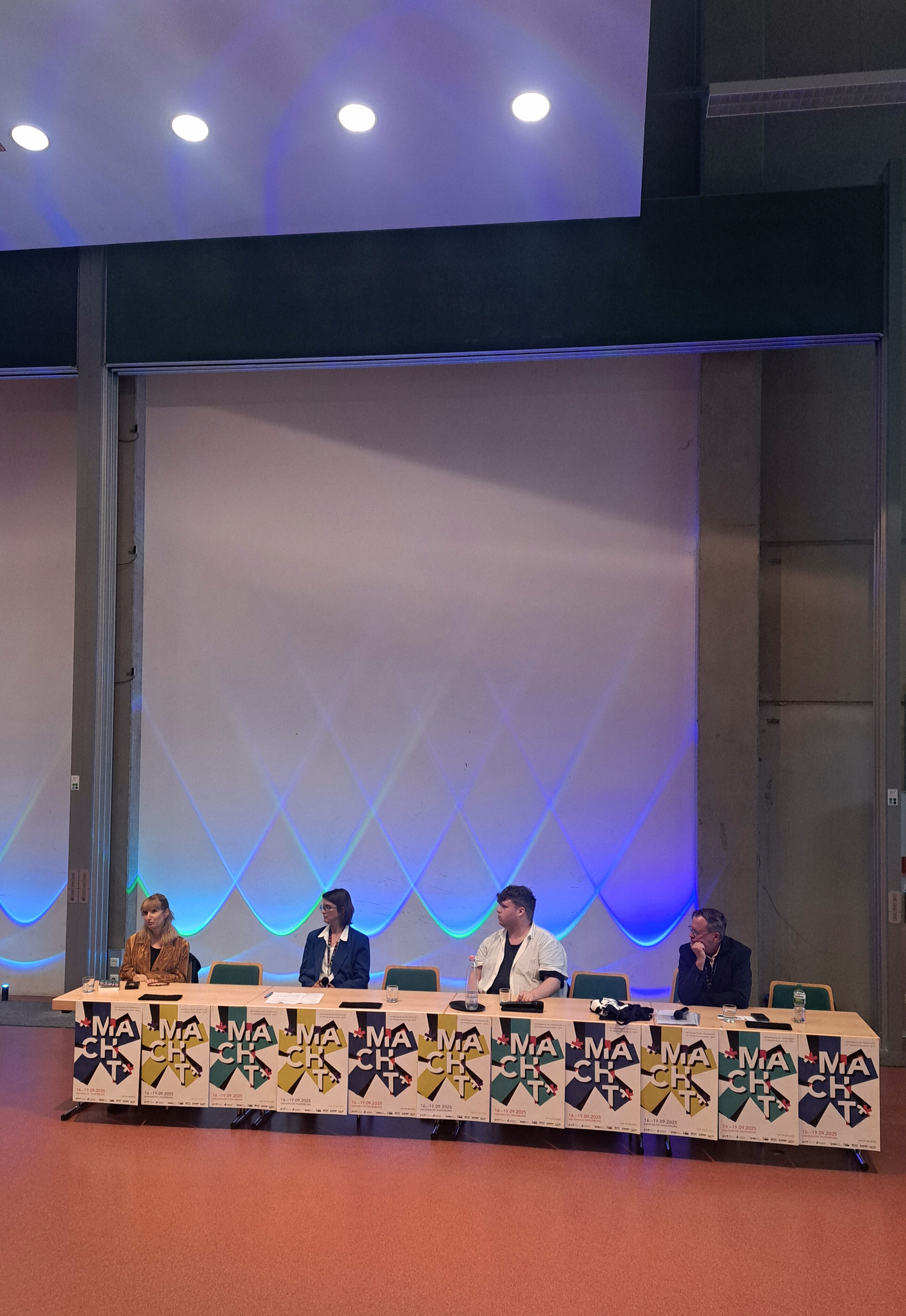
The event was framed and accompanied by Prof. Dr. Beate Flath, Managing Director of C:POP and Vice President of UPB, and her colleague and deputy spokesperson of C:POP Prof. Dr. Christoph Jacke, who then invited Charlie Mio Marlin and Sonja Eismann to a panel discussion.
"Structures"
The first chapter presented in the reading by Sonja Eismann is entitled "Structures" and deals with those very structures within the music industry. Unsurprisingly, yet shockingly, the author talked with an almost cynical undertone about the lack of FLINTA on festival stages and in leading positions in the industry. The argument that there are simply no successful bands with a female line-up is not enough: in patriarchal structures, it's more difficult for FLINTA people to be successful - and this lack of success is then used as an argument as to why FLINTA people cannot be booked, Eismann said. At the same time, there are big female pop stars such as Taylor Swift and Billie Eilish, who are also not suitable for the festival stages because they are too successful and therefore too expensive. According to Eismann's assessment and experience, particularly as a journalist and cultural scientist, women also prefer to consume music by artists of all genders, while men prefer music by men. From the perspective of event organisers, this could lead to the conclusion that female or non-binary acts decimate the attractiveness of an event for the audience and are therefore less promising than male acts - or that we as a society still have a long way to go when it comes to gender equality, with Eismann explicitly highlighting feminist associations and activities such as the "Female Pressure" network, which are themselves building alternative structures or have long wanted to change the established ones.
"Your body is always wrong"
The female body should be perfect in the public eye, although according to Eismann, the question of what is actually perfect can hardly be answered. Body-shaming is part of the game for female (pop) stars, no matter how successful star is. Eismann quoted internet comments as well as magazine articles in which female stars are accused of obesity or anorexia and concluded the chapter by answering the question of whether these women actually care. Yes, says Eismann. One example of many is Demi Lovato's nearly deadly overdose.
Charlie Mio Marlin then presented another song with a very similar theme. In "My Face", the performer addresses body shaming in both private and professional contexts and impresses the audience with his vocal talent and lyrical realisation: "My face is your poster / so come design me here and now / try out every font / come make me perfect"
"Men have expertise, women have a gender"
The third and final chapter presented by the author at the event is entitled "Writing about women in pop". Here, Eismann reported that, although she actually loves writing, she was in a very bad mood when writing the book. In the subsequent panel discussion, the author also noted that, even though she has been dealing with this issue for a long time, she decided to write an entire book about it, especially in connection with the debate surrounding the abuse of power in the music industry and the band Rammstein. She had also noticed an noticable increase in misogyny in the field of pop music cultures and industries as a result of digitalisation, which she wanted to put into words in a well-researched way.
Writing about women in pop is a peculiarity, or, to put it into a bad light, an anomaly. Genres such as rock draw a large part of their content and lyrics from misogyny, but still dominate the market. It is therefore hardly surprising that writing about women in pop is also characterised by misogynistic structures.
The panel discussion was then opened by Professor Beate Flath with the remark that writing about pop can take place on a wide variety of levels: She herself and her colleague Professor Jacke dealt with it on an academic level, while Eismann herself dealt with the topic journalistically and Charlie Mio Marlin artistically. In this context, Charlie Mio Marlin explains that their songs often emerge from themselves, the lyrics write themselves, so to speak. Frustration, insecurity and also fear are emotions that they deal with a lot when composing and writing lyrics, and which are also reflected in their live as an artist. Where and when you perform, what you post and what information you reveal about yourself always has to do with how much you want to make yourself vulnerable. Anyone who is on stage, especially as a FLINTA or non-binary person, must expect hate comments and worse, Sonja Eismann said.
Professor Jacke noted that there has long been an inequality in writing about pop across the different genders, and that even if this branch of pop research actually has a reputation for being innovative and perhaps rebellious, these structures are deeply rooted, but that a change has nevertheless been set in motion via more recent genres.
Sonja Eismann is asked by the audience whether this is a German problem or how writing about pop is treated internationally. In fact, pop feminism is a German phenomenon, while in the international sphere (or in the so-called pop cultural sphere, which is often limited in discourse to the Anglo-American and European regions), pop and pop culture have until recently tended to be ridiculed, including in feminism. Germany is "late to the party" in many respects - but there is also a "growing awareness".
Finally, the audience asked the panel whether change is even possible in the current capitalist system, which can generate value in terms of clicks, attention and money in the long term through hate and injustice. Even if there can hardly be a comprehensive answer to this question off the cuff, Professor Flath noted that writing about pop as a form of self-empowerment is already a step in the right direction. Highlighting the darker side of pop culture in particular contributes to a better understanding and hopefully to change in the long term, Professor Jacke added.
Charlie Mio Marlin provided the crowning finale with the live premiere of the song "Ambrosia". The audience listened spellbound and even moved and thanked them with euphoric applause. And contrary to the prevailing mood, the lyrics even ventured a little optimism:
"We waver, but never fall / Long live utopia"
Text: Alyssia Schröder
Photos: Gesine Flick