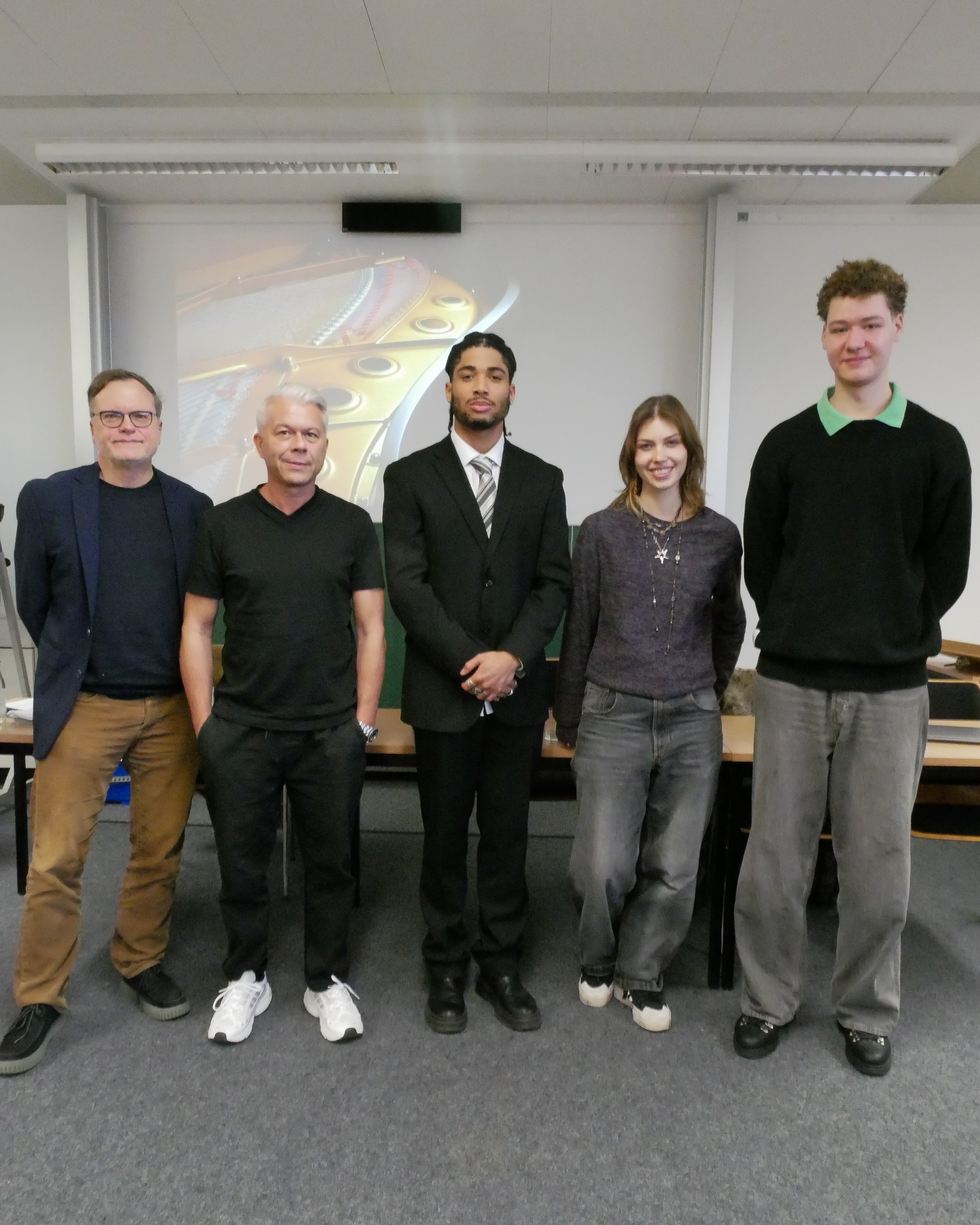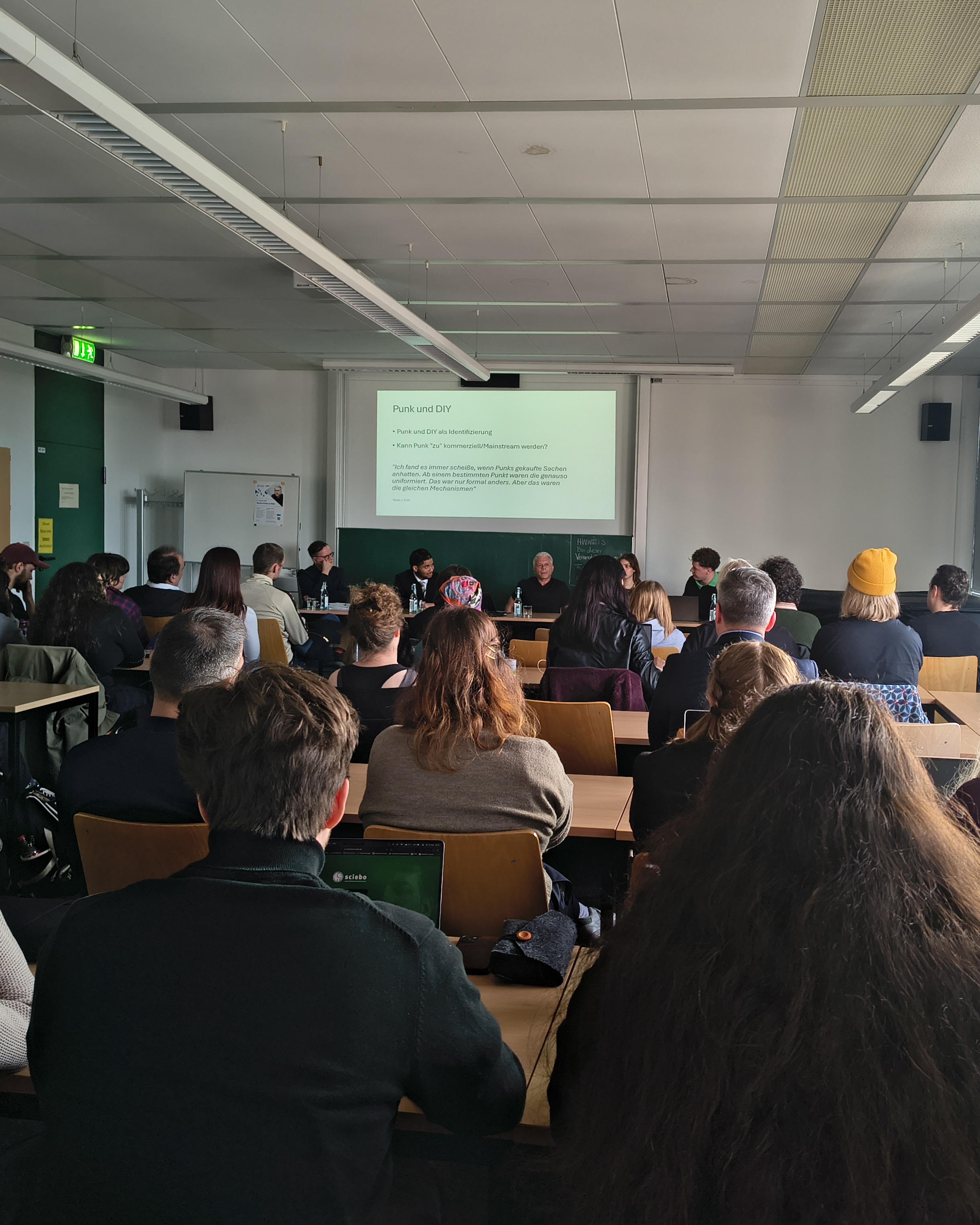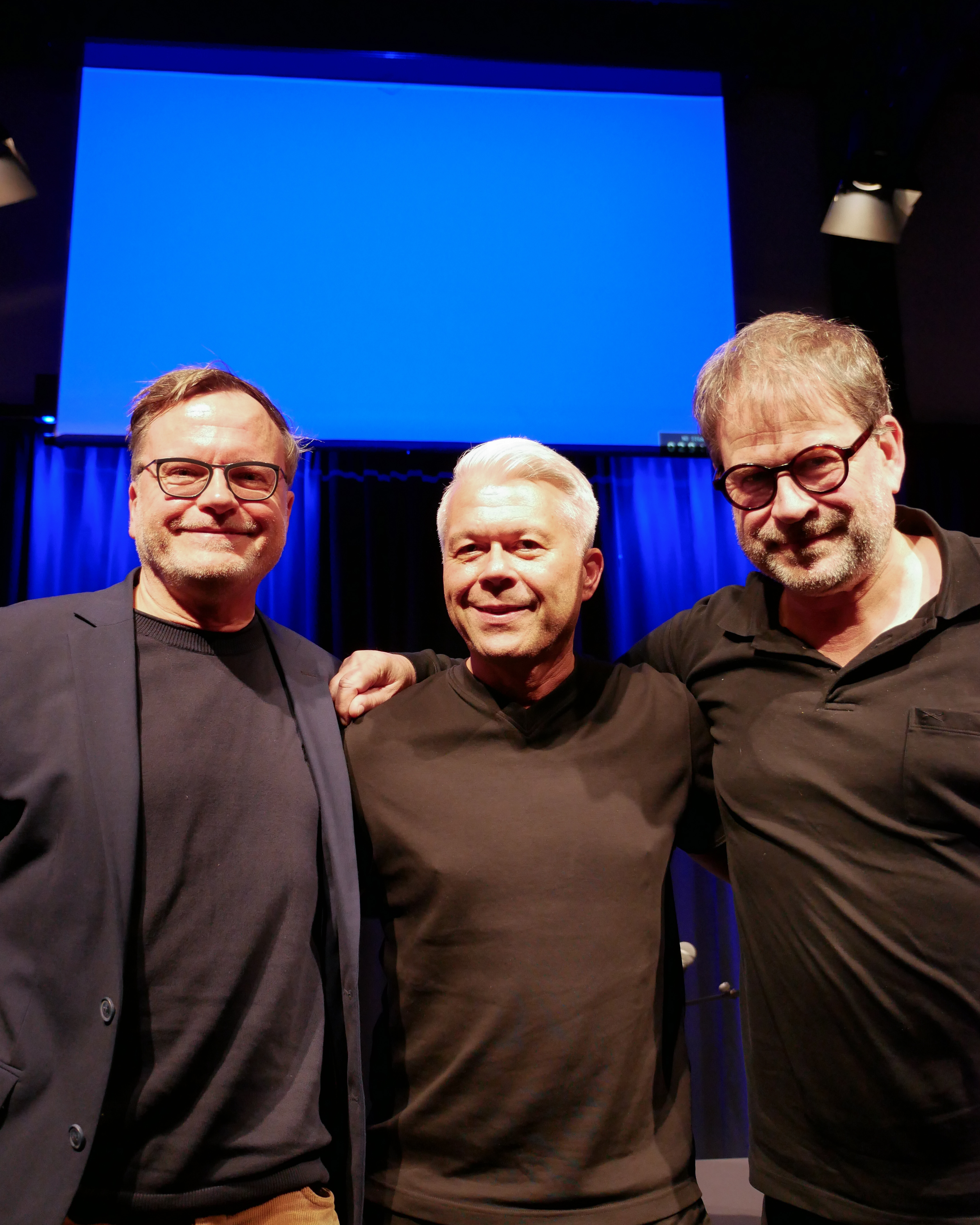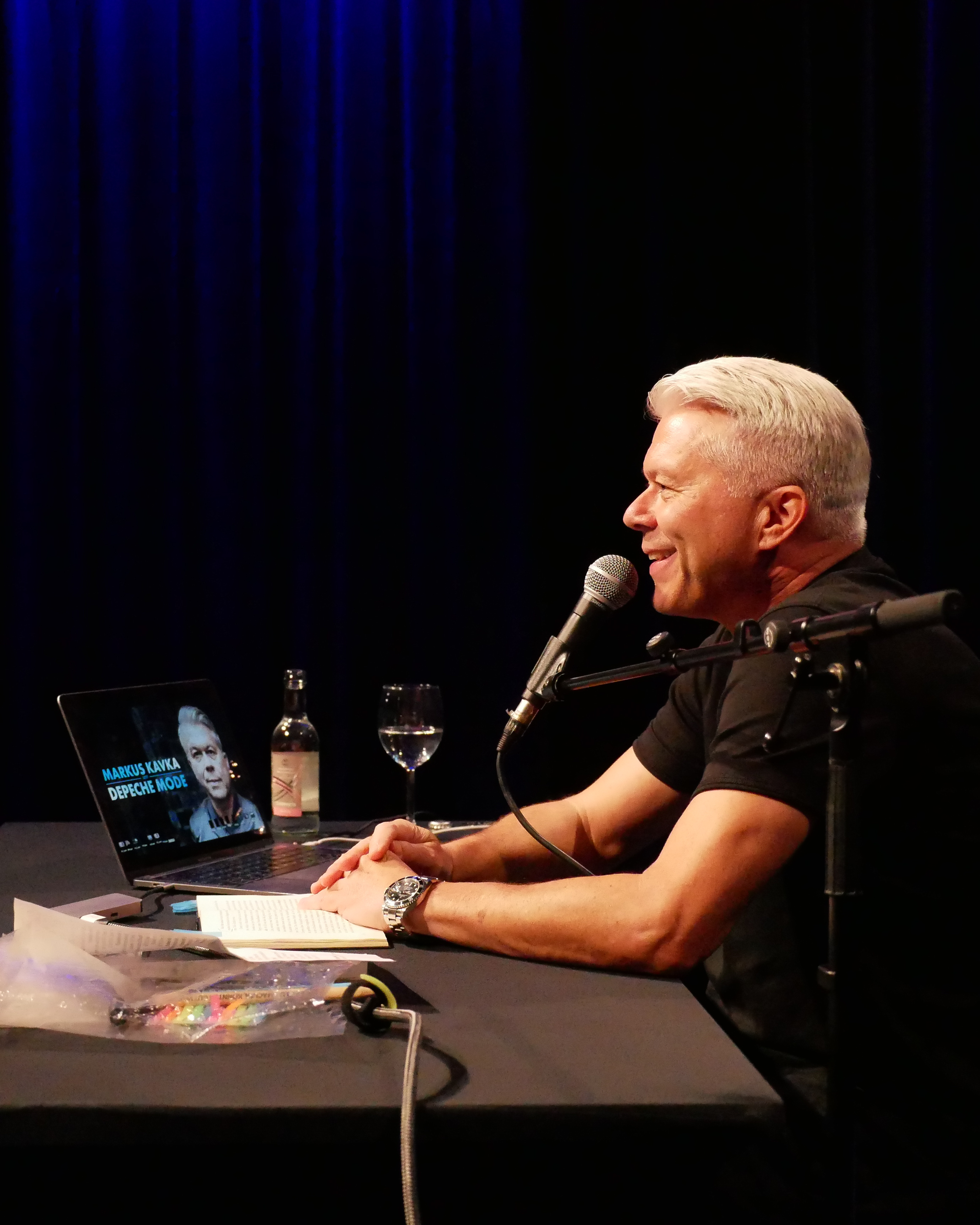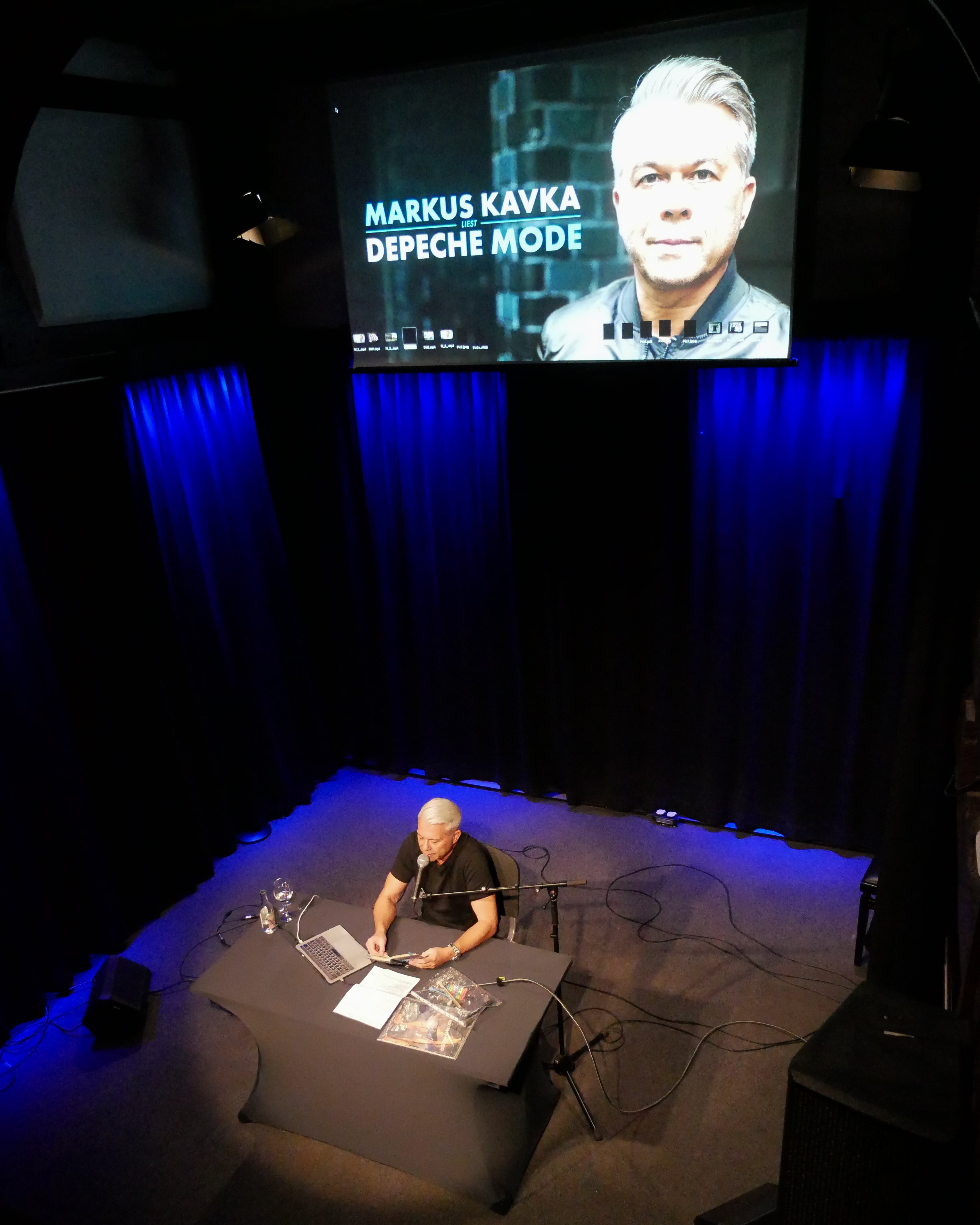
"If there is something you always wanted to ask Kavka – now's your chance!": With these words, Prof Dr Christoph Jacke, Head of the Popular Music and Media (BA/MA) programme and Deputy Managing Director of C:POP. Transdisciplinary Research Centre for Popular Music Cultures and Creative Economies, introduces the discussion with Markus Kavka. This took place as part of the seminar "Post Punk, New Wave and Synthie Pop: Subcultures, Mainstreams, Gender and Zeitgeister" at the University of Paderborn and was the first of two opportunities on this day to talk to the famous music journalist, podcaster and presenter Markus Kavka, who has already held the pop lectureship of the Popular Music and Media degree programme twice and has led related seminars and taken part in the "Popkritik".
Markus Kavka is well known for his presentations on Viva and MTV and has "actually interviewed all the greats of pop music", according to Professor Jacke. From Phil Collins and Chester Bennington to Madonna, Maria Carey, Nick Cave and his great pop music love Depeche Mode, Markus Kavka spoke to them and even shared a drink with one or two of them, as he later recounts during the evening reading of his book "Markus Kavka on Depeche Mode".
"Is that still punk rock?"
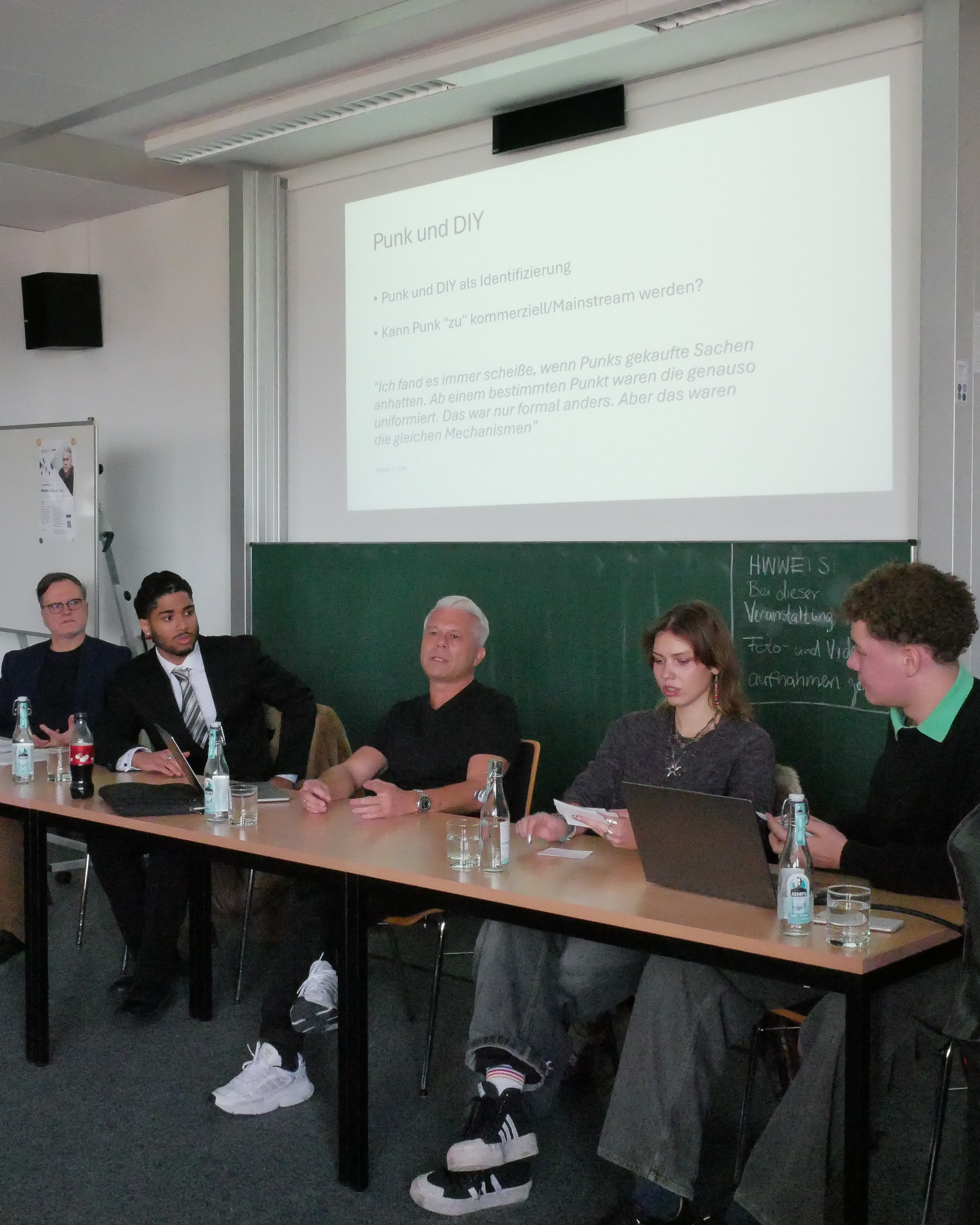
The discussion was led and moderated by the students of Professor Jacke's seminar. After a brief introduction to the seminar content, the guest from Berlin was immediately asked the first question: What is punk – and what's not punk anymore?
"The spirit of punk always includes rebellion, to be against something", answered Kavka. That is why punk bands with commercial success suffer from a loss of authenticity - on the one hand they are against the establishment, on the other hand they are also part of it. Progressive commercialisation, for example the sale of Ramones shirts by Swedish fast fashion giant H&M, can no longer be punk. But fashion is of course also a big part of punk:
"Of course there is also a visual punk aesthetic, which can be quite useful to recognize each other. You get to know your people from afar, and you know who to stay away from. Helps to avoid trouble.
How synthesizers democratised music
"I think it's amazing that I'm allowed to talk about synth pop in an academic context!" Kavka exclaims as the students introduced the next topic of the panel discussion: The characteristic sound of the eighties, and what the innovative instrument called "synthesizer" had to do with it.
According to Kavka, the synthesiser democratised music in the 1980s because suddenly everyone was able to create new sounds at home (if you could afford that new instrument, of course). Sound experiments and creation were no longer restricted to recording studios. These artificially created sounds opened new horizons to music and sound production. "The instrument was needed for the Zeitgeist of the eighties - and the instrument needed exactly that Zeitgeist"
Furthermore Kavka isn't surprised that the songs and the sounds of the eighties live through a massive comeback these days. The problems and discussions people are facing today are similar to those back then, so the comeback of the music style is just a natural consequence.
Music, journalism and the (omnipresent) topic of AI
The plenary asked whether the development of the synthesiser could be compared to the beginnings of autotune, and in a broader view, to the use of AI in music production and journalism. Kavka has a clear answer to this: just like Autotune, AI is a tool, albeit a very versatile one. AI cannot generate emotions and therefore no attitude. However, both are necessary components for good music as well as good journalism, and therefore AI will remain a tool in the future and is unlikely to become a creative producer itself.
Finally, Professor Jacke asked guest Markus Kavka a question alluding to the cold, dark music styles and times of the 1980s: what was his coldest and hottest interview? "The coldest Bon Jovi - the hottest Madonna," replies the journalist, casually waving off further questions.
The reading: "Markus Kavka on Depeche Mode" at the Deelenhaus
Later on, just a few steps away from the cathedral, the sold-out Deelenhaus was filled with guests flocking to the reading of Kavka's book "Markus Kavka on Depeche Mode". The 2020 book was published in a series by Kiepenheuer & Witsch, in which each volume focuses on one star and features prominent authors. In addition to Kavka's homage, there are also editions about Frank Ocean by Sophie Passmann, Die Toten Hosen by Thees Uhlmann, Nick Cave by Tino Hanekamp and Madonna by Lady Bitch Ray.
However, the audience at the Deelenhaus could expect more than just the band history of the synth-pop legends, peppered with a few song lyric analyses. For his multimedia presentation, Kavka has brought along videos and small performances (e.g. the Wavertanz) as well as photos from his youth during the early years of Depeche Mode. Kavka showed the audience how he got himself into music clubs in Munich and Berlin in his best gothic attire, among other place. He even made it into "Bravo" - a german magazine for teenagers which remains popular even in the digital age. An original edition where they showed a picture of him was given to Kavka last year by a reader of his book who stumbled across the chapter and collects "Bravo" herself. The journalist, who is always joking about himself, also shows interview excerpts in which he speaks professionally with the members of Depeche Mode. In retrospect, he reveals that not everything always went as smoothly as it might have been broadcast: From flattened car tyres to live broadcasts that weren't quite clear-cut and chaotic conversations at "Rock am Ring", Kavka describes his experiences surrounding the band, of whom he himself has been a big fan all his life.
It was definitely not just Depeche Mode fans who got their money's worth that evening. Markus Kavka took his audience on a very personal and entertaining journey back in time to the 1980s and its musical styles, fashions, hairstyles and bands, which, in addition to providing deep insights into music journalism with its anecdotes and photos from the time, also evoked nostalgia. His love of music and this band had always given him comfort and support, as his absolute favourite song by the band, "Never Let Me Down", puts it. According to Kavka, it remains to be seen whether the taffeta coat and buckled shoes from his Goth years will be taken out of the wardrobe again: “But I would always love to come back to Paderborn and Paderborn University.”
Text and photos: Alyssia Ron