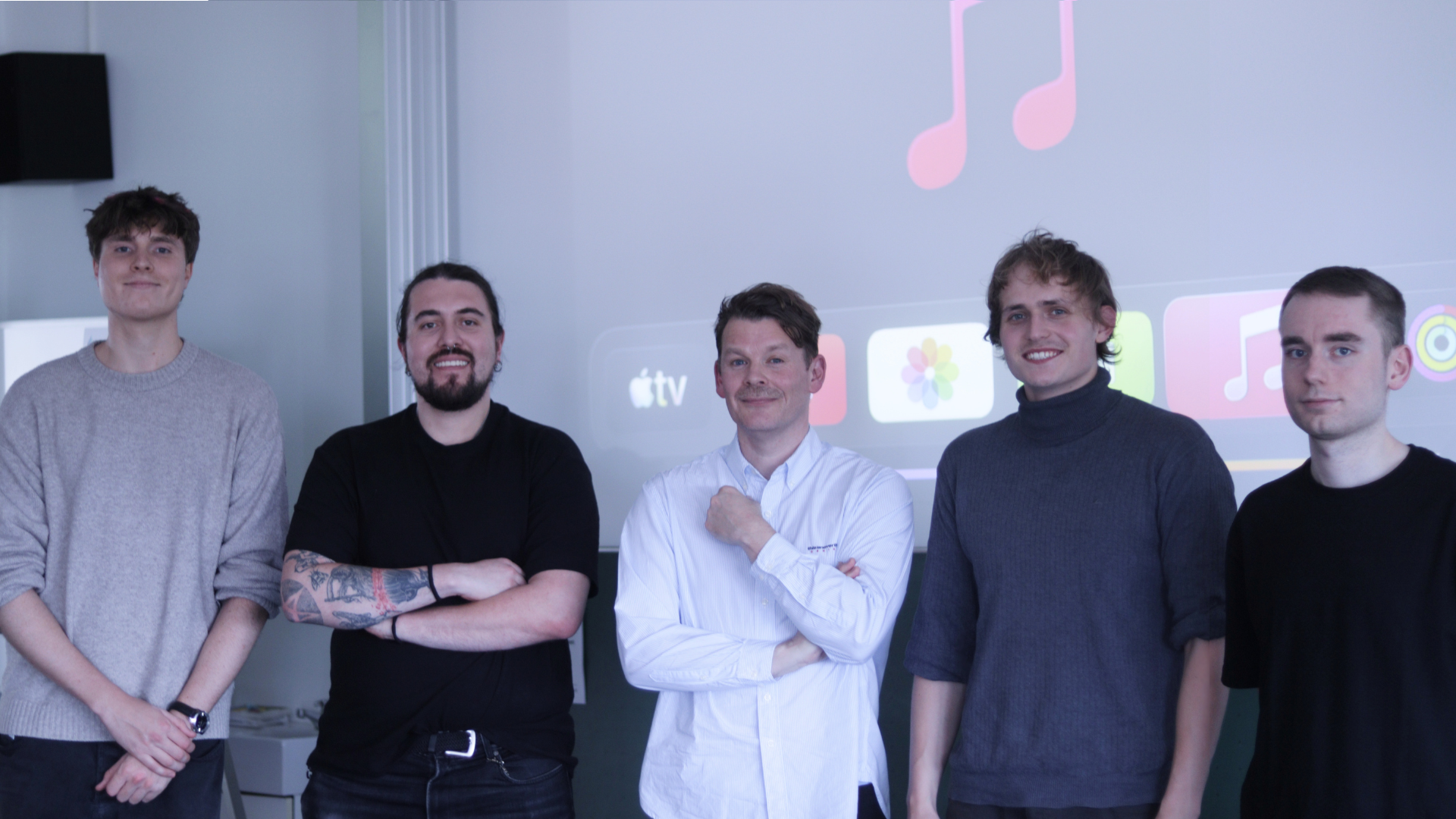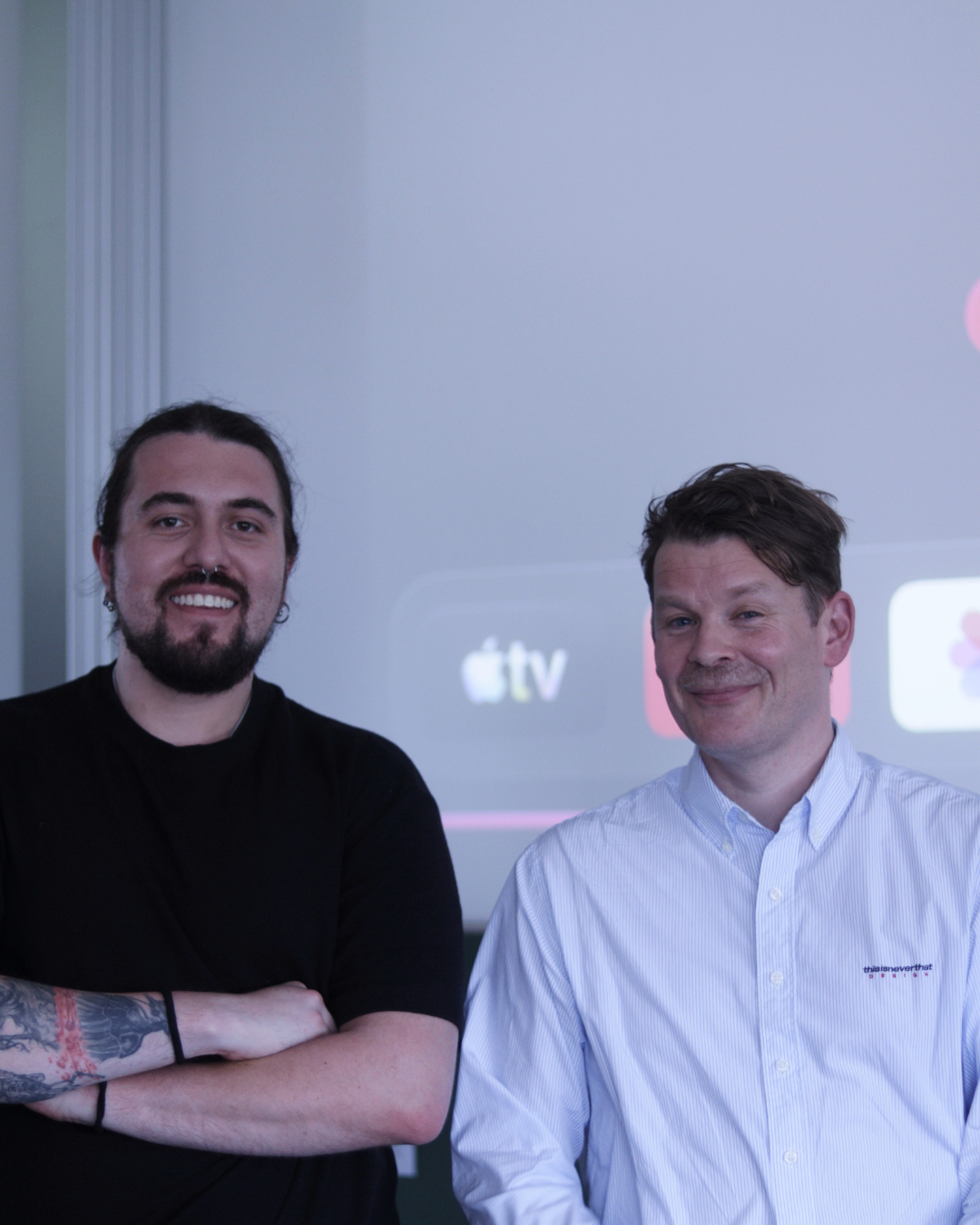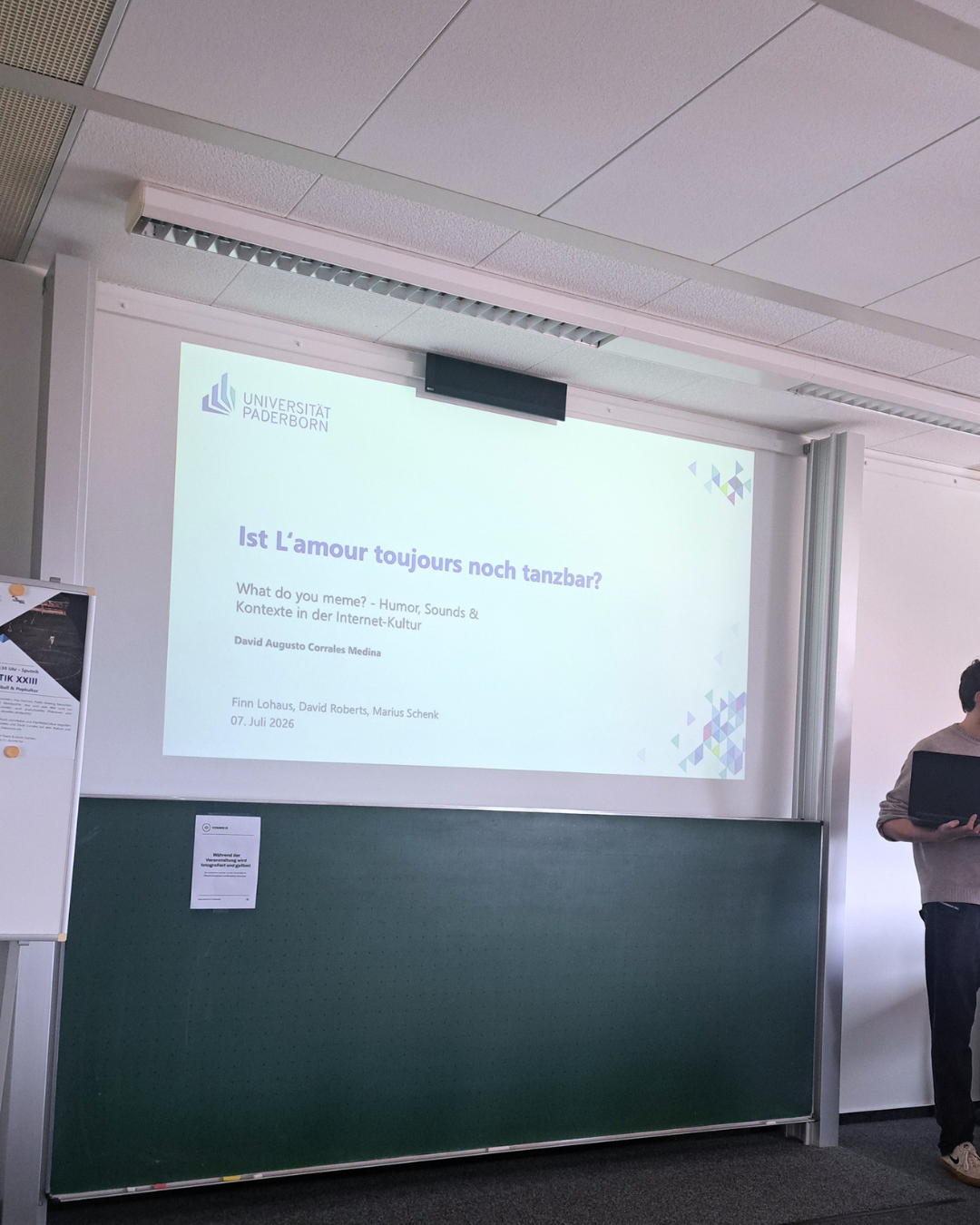
Is ‘L’amour toujours’ still just a harmless party song, or has it now become a chant with far-right connotations? Students and interested guests explored this question on 7 July 2026 together with Marcus Bösch, a political scientist and communications expert. He was invited by our research assistant David Corrales as part of his seminar ‘What do you Meme? Humour, Sounds and Contexts in Internet Culture’.
In the seminar, students examine well-known phenomena of internet culture and explore, amongst other things, what characterises memes, whether songs themselves can become memes, and how their social significance can be investigated. With Marcus Bösch, the focus was particularly on the political use of sounds, memes and TikTok.
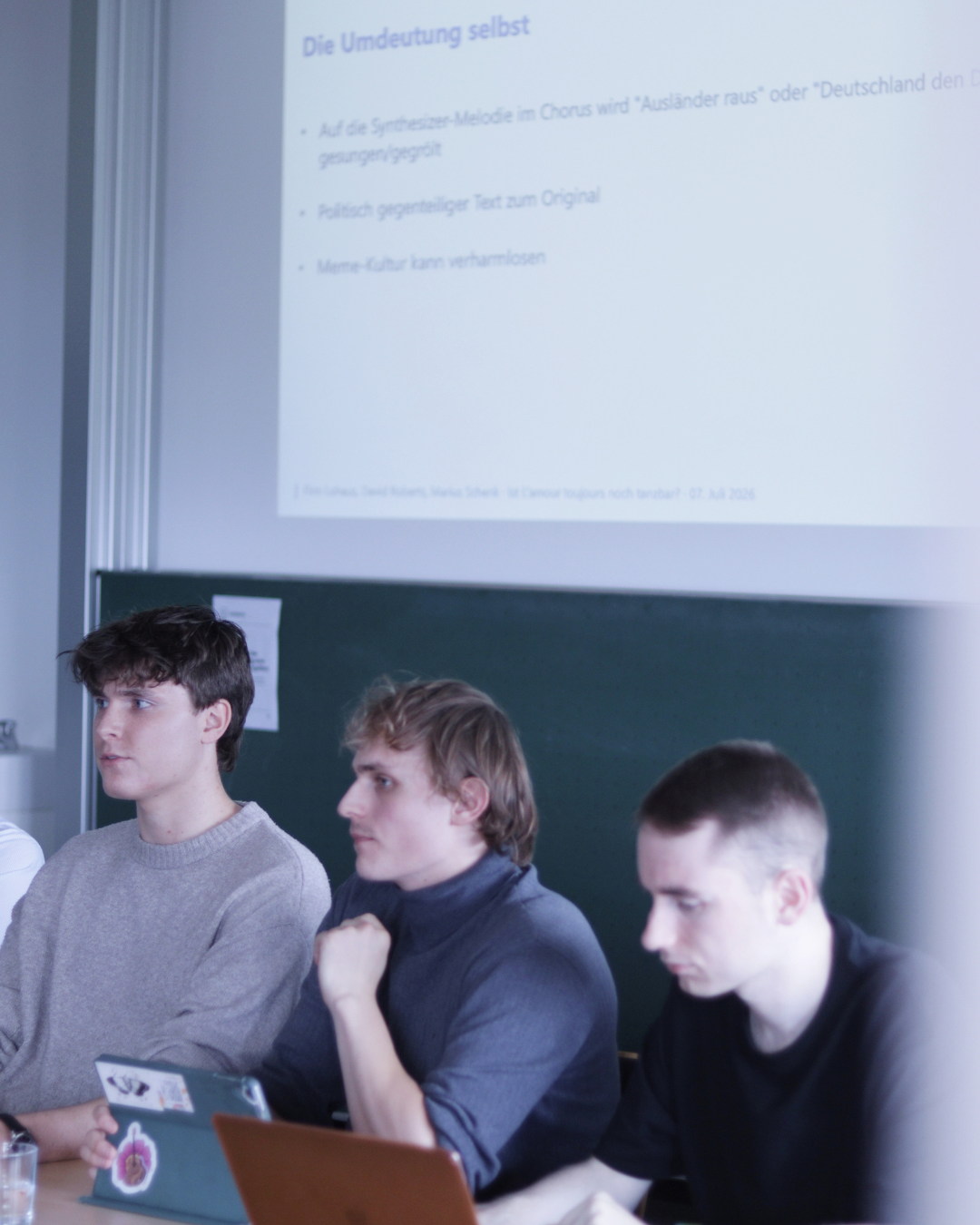
The discussion began with the racist reinterpretation of Gigi D’Agostino’s “L’amour toujours”. Even before the much-discussed incident on Sylt in May 2024, the melody had been associated with a racist slogan in videos. However, the Sylt video sparked a wide-ranging debate about racism within the middle and upper classes. As a result, the song was no longer played in some fan zones at the 2024 European Football Championship and at folk festivals, amongst other places.
Bösch made it clear that banning the song alone is hardly enough to prevent the spread of such messages. In the digital sphere, sounds can be constantly copied, remixed and placed in new contexts. So-called ‘dog whistles’ play an important role – political allusions that are understood primarily by those familiar with the relevant codes. Outwardly, users can claim that it is merely a song or a joke. The actual context often only becomes clear through further videos, symbols used or the comments sections. Thus, the political significance arises not from a single post, but from a mosaic of various clues.
The discussion thus showed that users are not merely recipients, but are themselves actively involved in the dissemination and transformation of political content. In this context, Bösch spoke of ‘participatory propaganda’. Nowadays, numerous users can remix, comment on and disseminate content to a wide audience. This benefits both political actors and the platforms themselves, whose business models are based on attention and interaction. Bösch sees the reappropriation of popular songs as a possible response to their co-optation by the far right. Artists and other stakeholderscan recontextualise sounds, remix them and imbue them with new meanings. Such attempts are not always successful, but are nonetheless important to ensure that far-right interpretations in the digital sphere are not left unchallenged.
Finally, the discussion turned to the question of how political codes can be identified. This involves not only looking at individual videos, but also examining sounds, comments and other uses. Schools, educational institutions and other social actors are therefore called upon to do more to impart knowledge about platform-specific languages, memes and codes.
We would like to extend our sincere thanks to Marcus Bösch for his visit, the fascinating insights into his research and the stimulating discussion.